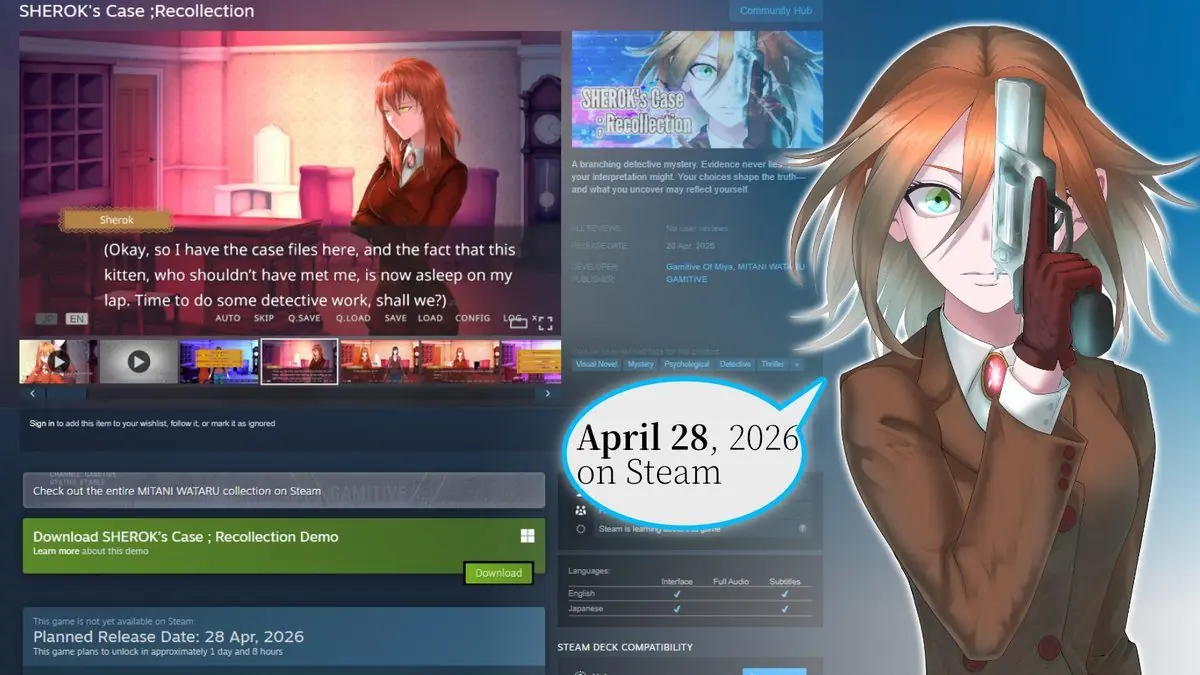
A new psychological mystery visual novel is hitting Steam this Monday, and it’s promising something most games in the genre struggle with – choices that actually matter.
SHEROK’s Case ;Recollection comes from indie developer gamitiveofmiya, and they’re making a bold claim. Your choices don’t just change dialogue options or unlock different endings. They shape what counts as truth in the story itself.
“Working on a psychological mystery visual novel. Releasing April 28 on Steam. Your choices shape the truth. SHEROK’s Case ;Recollection” – @gamitiveofmiya
That’s a pretty loaded promise for any narrative game. Most visual novels give you the illusion of choice while funneling you toward predetermined outcomes. But if gamitiveofmiya pulls this off, we’re looking at something more like an interactive investigation where your decisions actually rewrite reality.
The tech behind this kind of branching narrative isn’t simple. Traditional visual novels use flag systems – you pick option A, the game remembers, and later content references that choice. But reshaping truth itself? That requires dynamic story generation where earlier choices retroactively change what actually happened in the game world.
Think of it like this: instead of “you chose to trust the witness, so they help you later,” it becomes “you chose to trust the witness, so they were telling the truth all along.” The difference is huge from a development standpoint.
Visual novels have been having a moment on Steam lately. The platform’s algorithm seems to favor story-heavy indie games that generate discussion, and psychological mysteries hit that sweet spot. Players love dissecting plot twists and comparing different playthroughs.
The semicolon in the title (SHEROK’s Case ;Recollection) is interesting from a design perspective. It suggests the story might split into distinct segments or perspectives. Could be a hint about how the choice system works – maybe you’re literally reconstructing memories or piecing together different versions of events.
Gameitiveofmiya isn’t a household name, but that’s normal for the visual novel space. Some of the best narrative games come from small teams who can focus purely on storytelling without committee interference. Limited resources often force creative solutions for complex narrative mechanics.
The timing feels right for this kind of release. Monday launches are unusual – most developers aim for Thursday or Friday to catch weekend sales. But psychological mysteries benefit from word-of-mouth, and Monday gives the game a full week to build buzz before the next weekend.
Steam’s visual novel community is pretty active about sharing screenshots and discussing plot points. If the choice system delivers on its promise, expect to see players comparing radically different story outcomes within days of release.
The real test will be replay value. Traditional visual novels struggle with this because once you know the mystery, there’s little reason to revisit. But if choices genuinely reshape truth rather than just branching paths, each playthrough could feel like investigating a completely different case.
From a technical standpoint, this approach requires careful balance. Too much variation and the story becomes incoherent. Too little and players notice they’re just seeing the same events with different flavors.
The psychological angle adds another layer of complexity. These games live or die on their ability to mess with player expectations. Red herrings need to feel meaningful, not arbitrary. Plot twists should feel inevitable in hindsight while remaining genuinely surprising.
Visual novels also depend heavily on writing quality. No amount of clever choice mechanics can save bad dialogue or weak characterization. The mystery needs to hook players immediately and maintain tension throughout multiple playthroughs.
SHEROK’s Case ;Recollection launches April 28 on Steam. No word yet on pricing, but visual novels typically range from $10-25 depending on length and production values. Given the ambitious choice system, expect this to land somewhere in the middle of that range.
The real question is whether gamitiveofmiya can deliver on their promise. Choice-driven narratives sound great in theory but often fall apart in execution. If they nail it, this could be the kind of sleeper hit that defines how visual novels handle player agency going forward.