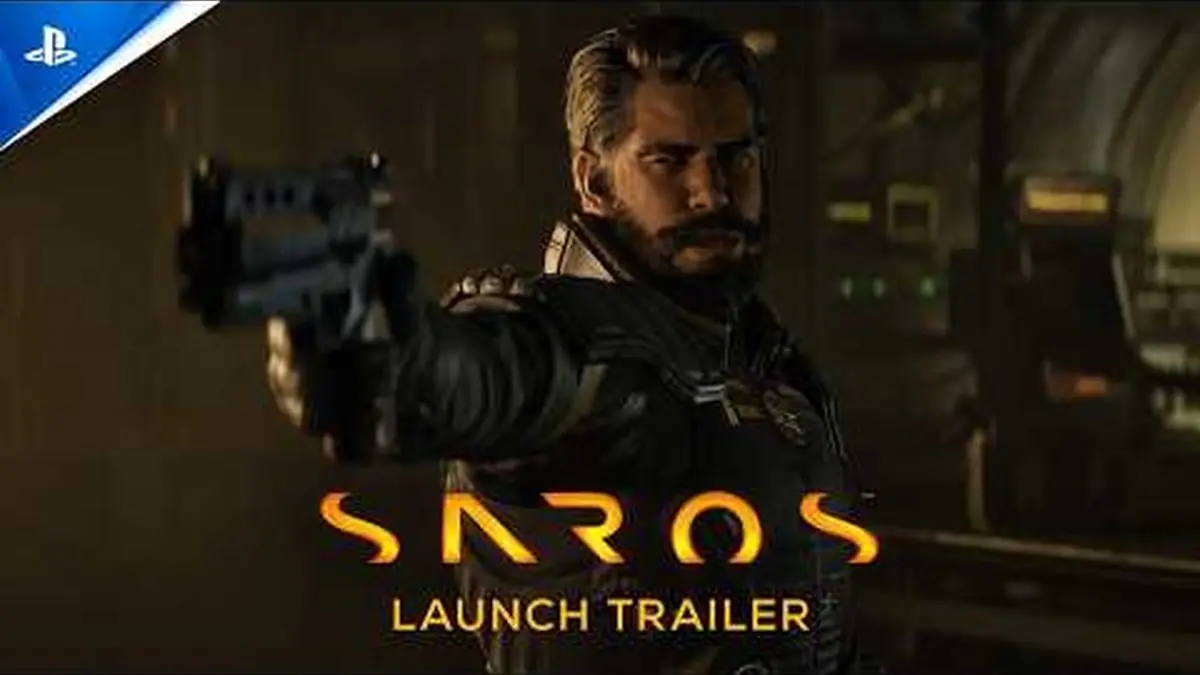
Housemarque just dropped the launch trailer for Saros, and it’s clear this isn’t just another bullet-hell shooter. The Finnish studio has crafted something that feels more like interactive horror fiction than traditional arcade action. Set for April 30 on PlayStation 5 and PS5 Pro, Saros promises to blur the lines between nightmare and reality in ways that’ll stick with you long after you put the controller down.
The trailer opens with Stack, voiced by the legendary Keone Young from Deadwood, painting disturbing visions that are somehow being forced into his mind. It’s a deeply unsettling scene that immediately establishes Saros as something far more ambitious than your typical action game. Young’s gravelly delivery adds weight to every cryptic word, making you wonder what cosmic horror is unfolding on the alien world of Carcosa.
“Today we are thrilled to share our launch trailer for Saros, coming out on April 30 for PlayStation 5 and enhanced for PlayStation 5 Pro. We’re also excited to share new information on gameplay modifiers, accessibility options, and more. For our launch trailer we wanted to show more mystery, characters, weapons and, of course, more bullet ballet action for you all. The opening features Stack, performed by the brilliant Keone Young (Deadwood) painting images that are being forced into his mind on Carcosa, followed by stunning imagery of the Cathedral.” – @Gregory Louden
What makes this trailer special is how it weaves narrative threads through the action. We catch glimpses of protagonist Arjun navigating what the developers call “liminal spaces” – a hotel corridor that feels pulled from a David Lynch film, a future London alley that shouldn’t exist. These aren’t just pretty backdrops for the shooting; they’re integral to understanding whatever psychological journey Arjun is on. Housemarque has always excelled at making players feel isolated in hostile worlds, but Saros seems to be pushing that existential dread to new heights.
Of course, some players are worried about whether Housemarque can balance narrative ambition with their signature tight gameplay. The studio’s previous game, Returnal, sometimes felt like it was fighting between being a story-driven experience and a pure arcade challenge. Early footage suggests similar tensions in Saros, where dramatic character moments might interrupt the flow of combat. There’s also the question of accessibility – while the team promises enhanced options building on Returnal’s foundation, their games have historically been punishingly difficult in ways that can lock out casual players.
The Carcosan Modifiers system seems designed to address these concerns directly. Players can dial down the challenge with Protection Modifiers that boost damage or shield power, or ramp things up with Trial Modifiers for hardcore players. It’s a smart solution that lets story-focused players experience the narrative without hitting brick walls, while still preserving the core challenge that defines Housemarque’s identity.
What’s fascinating about Saros is how it positions itself within the broader landscape of narrative-driven action games. The liminal space concept feels like a direct response to games like Control and Alan Wake 2, where environments become characters in their own right. Carcosa isn’t just an alien planet; it’s a psychological state, a place where reality bends and breaks. The Cathedral imagery in the trailer suggests religious or cosmic horror themes that could rival the best of Lovecraftian gaming.
The weapon variety looks impressive too. The Chakram and Illumine Beam Power weapons shown in the trailer suggest a focus on tactical variety rather than just spray-and-pray shooting. Multiple weapon archetypes that generate procedurally each cycle means players will need to adapt their strategies constantly. It’s the kind of system that rewards experimentation and keeps the combat fresh across multiple runs.
Housemarque’s collaboration with PlayStation studios is evident in the production values. The PS5 Pro enhancements promise to make Carcosa’s twisted landscapes even more immersive, while the audio design – crucial for any psychological horror experience – sounds particularly rich. The way Stack’s voice echoes through those opening scenes suggests the team understands that atmosphere is just as important as action.
Looking ahead to April 30, Saros represents a crucial test for narrative-driven action games. Can a studio known for arcade perfection successfully tell a complex story without losing what makes their gameplay special? The early signs are promising, but the real test will be whether players embrace this darker, more introspective take on the bullet-hell formula. If successful, Saros could redefine what we expect from action games in the same way Returnal challenged our assumptions about roguelikes.