When we think about what makes competitive gaming toxic, it’s usually the obvious stuff — rage quitting, trash talk, or trolling. But sometimes the ugliest side of our community shows up in ways that hit way deeper. That’s exactly what happened when FACEIT staff member Darwin decided to call out a player’s discriminatory behavior towards Ukrainian teammates.
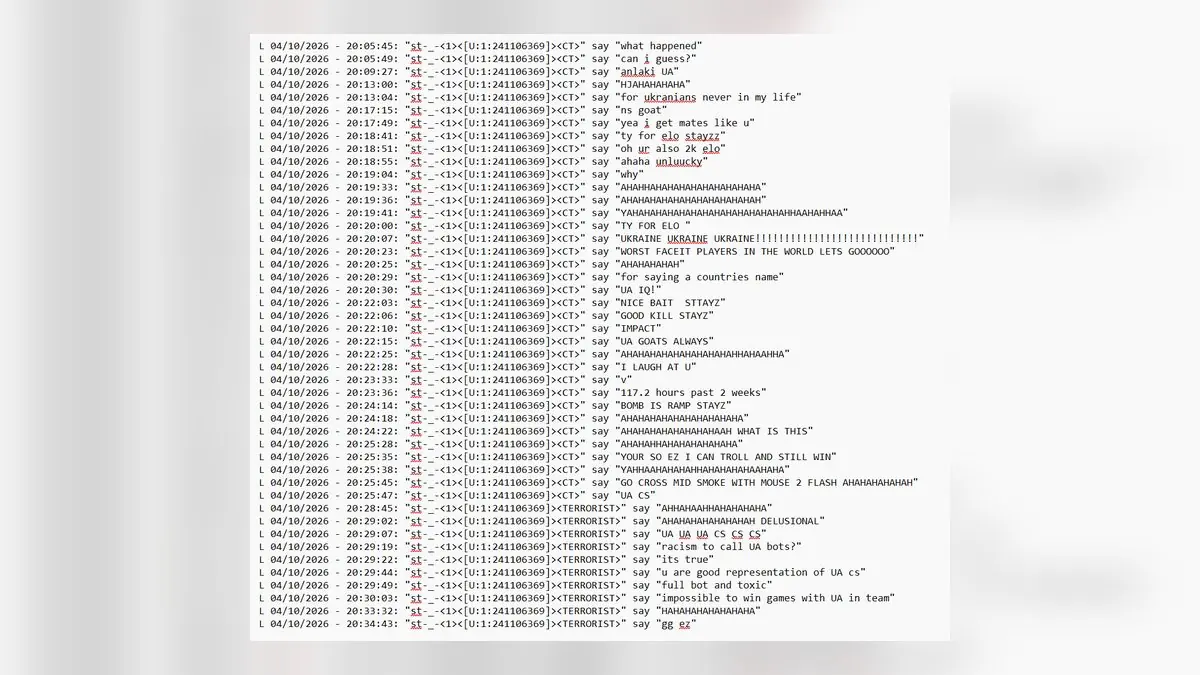
What started as a regular competitive match turned into something much more serious when one player decided to target their Ukrainian teammates with discriminatory language and behavior. Instead of letting it slide, Darwin took the unusual step of publicly documenting exactly what went down.
“You started trash-talking them immediately, asking if you could guess why one of them lagged out (we both know what you meant by that) and saying ‘anlaki UA’. You then spammed them the entire game. I get annoyed just reading the text. When one asked for a timeout, you said ‘for ukranians never in my life’. It’s not the worst language, but I can completely understand why someone would find this behaviour incredibly annoying.” — @FACEIT_Darwin
Reading Darwin’s breakdown is pretty uncomfortable, and that’s the point. The player didn’t just use random insults or get heated about the game. They specifically targeted their teammates based on nationality, making assumptions about connection issues and refusing basic courtesies like timeouts.
What makes this situation stand out isn’t just the behavior itself — toxic players aren’t exactly new to any of us who’ve spent time in competitive gaming. It’s that a staff member felt the need to document and share it publicly. That doesn’t happen unless there’s a bigger problem that needs addressing.
Darwin’s decision to call this out shows how platform staff are dealing with discrimination that goes beyond typical gaming toxicity. When someone refuses a timeout request specifically because of where their teammates are from, that’s not just being a bad teammate — that’s targeted discrimination.
The timing of this incident also matters. Ukrainian players have faced increased harassment and discrimination across gaming platforms over the past few years. What should be an escape and a way to connect with the global gaming community has become another place where real-world conflicts and prejudices follow players into their matches.
For those of us who’ve been part of competitive gaming communities for years, incidents like this force us to look at patterns we might have gotten too comfortable ignoring. How often do we see nationality-based harassment and just write it off as “typical gaming toxicity”? When does trash talk cross the line into something more harmful?
FACEIT’s position here is interesting too. As a platform that hosts millions of competitive matches, they’re constantly balancing community management with the reality that competitive gaming can get heated. Having staff members publicly document specific instances of discrimination suggests they’re taking a more active stance on behavior that targets players based on identity rather than just gameplay.
The fact that Darwin described the behavior as “not the worst language” but still “incredibly annoying” highlights something important about how discrimination works in gaming spaces. It’s often not the most extreme examples that do the most damage — it’s the constant, lower-level harassment that makes players feel unwelcome and excluded from communities they want to be part of.
This incident also raises questions about what effective moderation looks like in competitive gaming. Traditional approaches focus on chat filters and automated detection, but targeted discrimination often involves context and subtext that’s harder for systems to catch. Human oversight becomes crucial, but it’s also resource-intensive and can’t be everywhere at once.
Looking ahead, situations like this are likely to become more common as gaming platforms grapple with their role in addressing real-world conflicts and discrimination. The global nature of online gaming means players from different countries and backgrounds are constantly interacting, and tensions from outside the gaming world inevitably spill over.
For platforms like FACEIT, this creates an ongoing challenge: how do you maintain competitive integrity while also ensuring all players feel safe and welcome? The answer probably involves continued evolution of moderation policies, better training for staff, and clearer community standards about what crosses the line from competitive banter to discrimination.
What we as a community do with incidents like this matters too. When staff members take the time to document and share examples of discriminatory behavior, it’s an opportunity for us to reflect on our own standards and speak up when we see similar issues in our matches and communities.