Sometimes the best stories happen when you’re not looking for them. That’s exactly what happened to one Pokémon fan who stumbled upon something special at a weekend pop-up market in their neighboring town.
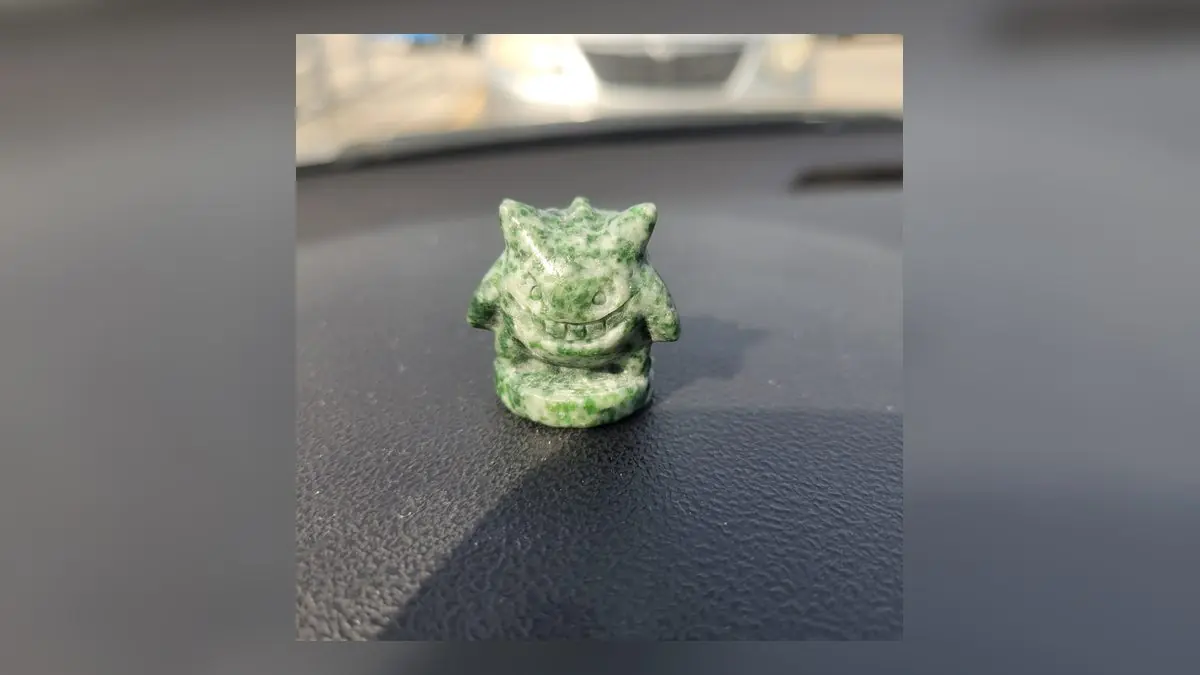
What started as a casual browse through local vendors turned into a perfect example of how gaming culture writes itself into unexpected places. Among the usual mix of handmade crafts and vintage finds, this collector discovered something that would make any Pokémon trainer’s heart skip a beat: crystal and stone Pokémon figures that transformed beloved digital creatures into tangible art pieces.
The discovery sparked genuine excitement in the gaming community, with the fan sharing their find on Reddit‘s r/gaming forum. Their enthusiasm was infectious and immediate.
“This stoned boi – next town over had a pop up market this weekend. selling different things, including crystal and stone Pokémon, and you know I had to get mah boi.” — u/Rosscovich on r/gaming
That simple phrase “you know I had to get mah boi” tells a whole story. It’s not just about buying something cool – it’s about recognition, connection, and the instant bond between trainer and Pokémon that transcends medium. Whether it’s pixels on a screen or crystal carved by human hands, that relationship remains the same.
The post resonated with fellow gamers who understood that feeling completely. There’s something magical about finding your favorite digital companion reimagined in physical form, especially when it’s crafted from materials that feel ancient and mystical. Crystal and stone work perfectly for Pokémon – these creatures already exist in a world where geology and biology intertwine, where Rock-type moves clash with mystical psychic powers.
What makes this story particularly compelling is how it reflects the evolving narrative of gaming culture itself. We’re witnessing a chapter where digital experiences increasingly seek physical expression. Pop-up markets have become the perfect setting for this transformation – temporary spaces where creativity meets commerce, where local artisans can experiment with gaming-inspired art without the pressure of permanent storefronts.
These markets tell their own stories too. They’re democratic spaces where anyone with skill and passion can set up shop for a weekend. No corporate licensing deals, no mass production – just individual creators interpreting the games that move them. It’s grassroots fandom at its purest, creating new lore through craftsmanship.
For Pokémon specifically, this trend feels like a natural evolution of the franchise’s core narrative. The series has always been about discovery, about venturing into new places and finding unexpected treasures. Pop-up markets recreate that sense of exploration in real life. You never know what rare find might be waiting around the next vendor’s table, just like you never know what Pokémon might appear in the next patch of tall grass.
The materials matter too. Crystal and stone connect to Pokémon’s elemental mythology in ways that plastic figures simply can’t. These aren’t mass-produced toys – they’re artifacts that feel like they could have been discovered in the actual Pokémon world, perhaps in some ancient cave where Geodude once gathered or where legendary creatures left traces of their power crystallized in rock.
This phenomenon also speaks to how gaming stories transcend their original medium. Pokémon began as a Game Boy adventure about catching creatures and became a cultural force that inspires art, music, fashion, and now geological craftsmanship. Each reinterpretation adds new layers to the overarching narrative, new ways for people to connect with characters and worlds that have shaped their lives.
The success of such niche collectibles suggests we’re entering an era where gaming culture values uniqueness over uniformity. Fans are seeking pieces that tell personal stories, not just display franchise loyalty. A crystal Charizard carries different emotional weight than a factory-made plushie – it represents individual artistry interpreting shared mythology.
Pop-up markets are perfectly positioned to continue this cultural shift. They offer the flexibility for artisans to experiment with gaming themes without major financial risk, while giving fans access to truly unique pieces that can’t be found in traditional retail spaces. It’s a new ecosystem where creativity and collecting intersect.
As gaming culture matures, we’ll likely see more of these unexpected crossovers between digital entertainment and traditional crafts. The next chapter might feature hand-blown glass Pokéballs, or perhaps wooden carvings of Zelda characters, or metal sculptures inspired by sci-fi games. The possibilities are as endless as the creativity of the people who love these digital worlds enough to bring them into physical reality.
For now, one fan has their crystal companion, and the rest of us have a glimpse into how gaming culture continues to write new stories in the most unexpected places.