
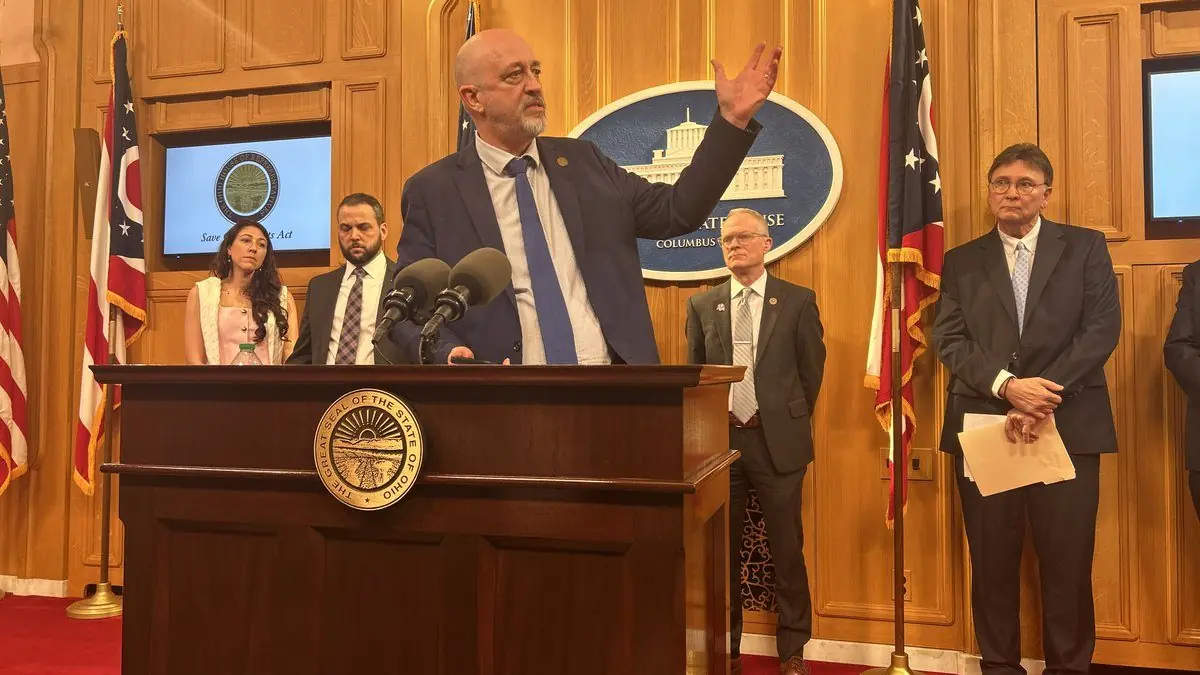
Ohio Republicans just declared war on sports betting. And they’re not messing around.
Two new bills hit the state legislature that would basically nuke the entire online sports gambling system. No online bets. No props. No parlays. No credit cards. Maximum bet? One hundred bucks. That’s it.
This isn’t regulation. This is demolition.
“NOW: Ohio Republican lawmakers are introducing two different bills to overhaul the sports gaming/gambling system: – No online bets – Ban on in-game, prop and parlay bets – Limits wagers to $100 – No ads during games – No using credit cards to bet” — @MorganTrau
Let’s break down what this actually means. Right now, Ohio’s sports betting market is worth millions. People bet on everything from point spreads to whether a quarterback will throw for over 250 yards. They do it from their phones while watching the game.
All of that? Gone.
The $100 cap is particularly brutal. That’s not even enough to make most serious bets interesting. High rollers who drop thousands on a single game would be limited to what amounts to lunch money. It’s like limiting Call of Duty lobbies to six players max.
Banning prop bets kills half the fun too. No more betting on first touchdown scorer. No more over/under on rebounds. No more “will there be a safety” bets that make boring games watchable. Just straight win/lose action.
The credit card ban is smart from a harm reduction angle though. Can’t bet money you don’t have if you can’t use plastic. Forces people to use actual cash they already possess.
But here’s where it gets interesting from a market perspective. Ohio isn’t some small-time player in sports betting. The state launched legal sports gambling in January 2023 and it exploded. We’re talking hundreds of millions in handle every month.
Cutting off online betting would push all that action to physical sportsbooks. But Ohio doesn’t have Vegas-style casino density. Most bettors would either drive hours to place a wager or just stop betting entirely.
Or they’d go underground. Black market betting never went away — it just got smaller when legal options showed up. Kill the legal market and illegal books start looking attractive again. No taxes. No limits. No government oversight.
The advertising ban makes sense from a parent’s perspective. Kids shouldn’t see gambling ads every five minutes during a basketball game. But it also cuts off a major revenue stream for sports media companies that depend on those ad dollars.
Some states are watching Ohio closely right now. If these bills pass and don’t cause economic chaos, other Republican-controlled states might follow suit. Florida already has restrictive gambling laws. Texas never fully embraced sports betting to begin with.
But other states are going the opposite direction. New York’s sports betting market is massive. Pennsylvania keeps expanding options. The patchwork of state laws is getting more complex, not simpler.
For Ohio’s current sportsbook operators, this would be catastrophic. DraftKings, FanDuel, BetMGM — they all built infrastructure expecting a thriving online market. Forcing everything into retail locations means layoffs and facility closures.
The timing is interesting too. March Madness just wrapped up. NFL season is months away. If lawmakers wanted to kill momentum, they picked the right window.
From a technical standpoint, enforcing an online betting ban gets tricky fast. VPNs exist. People cross state lines. Offshore books don’t care about Ohio law. The state would need serious enforcement resources to make it stick.
Professional sports leagues won’t love this either. They’ve gotten used to the data partnerships and integrity fees that come with legal betting. Less betting means less revenue from those deals.
The gambling addiction angle is legitimate though. Ohio’s seen problem gambling rates climb since legalization. Suicides linked to gambling debt. Families destroyed by betting spirals. The social costs are real.
But completely nuking the system instead of adding guardrails feels like using a grenade to kill a spider.
What’s next depends on political math. Republicans control Ohio’s legislature, but gambling generates tax revenue the state uses for education. Killing that income stream means finding replacement funding somewhere else.
The bills still need committee hearings and floor votes. Industry lobbyists will fight hard. But if they pass, Ohio becomes the test case for whether states can successfully reverse course on sports betting.
Other states will be watching. Because if Ohio pulls this off without economic disaster, the dominoes might start falling elsewhere.
The war on sports betting just found its first battlefield.