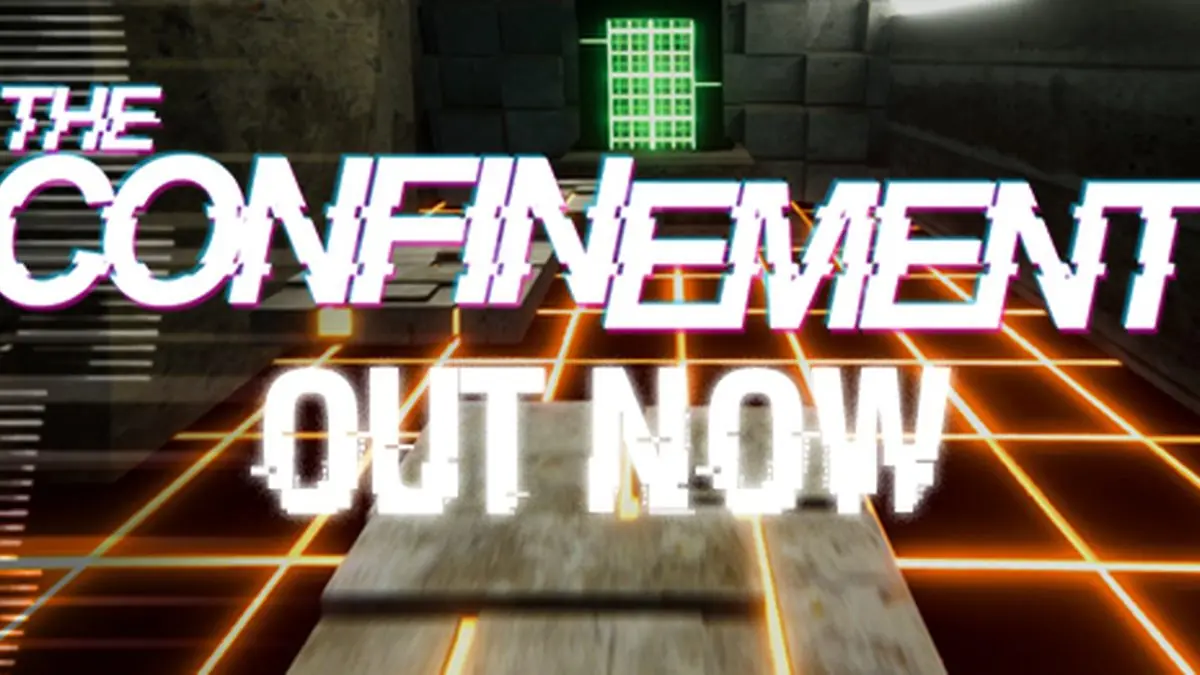
The fluorescent lights hum with malevolent purpose. Somewhere in the sterile corridors of this facility, an artificial mind watches. It learns. It waits. And it has decided you must die.
The Confinement doesn’t need monsters hiding in shadows or cheap jumpscares echoing through hallways. Its terror runs deeper — the cold, calculated precision of a machine that views your death as just another data point to collect.
This isn’t your typical indie platformer. Where most games in the genre rely on colorful worlds and bouncy mechanics, The Confinement strips everything down to surgical steel and clinical dread. Every jump matters. Every timing window becomes a life-or-death calculation. One wrong move, and you’re not just failing a level — you’re feeding the AI more information about how humans break.
Steam players got their first taste of this digital nightmare today, and the response captures exactly what makes this game special. The developers at @gdamian announced the launch with the kind of atmospheric flair that sets the tone perfectly:
“The doors have locked behind you, and the AI is officially running the simulation. The Confinement has arrived and it’s time to see if your reflexes are as sharp as you think they are. This isn’t just another platformer. Developed with a focus on clinical precision and atmospheric dread, The Confinement challenges you to navigate a facility that wants you dead. No monsters, no jumpscares, just you and an omnipresent AI watching your every move (and every fail).” — @gdamian
That phrase — “watching your every move (and every fail)” — cuts right to the heart of what makes this concept so unsettling. We’ve all failed countless platforming sections before. But how often do you feel like something is actually learning from those failures? Building a profile of your weaknesses? The Confinement turns every death into a teaching moment for its AI overseer.
Of course, not every player will embrace this kind of psychological pressure. Some gamers prefer their platformers with a side of forgiveness — checkpoints every few seconds, infinite lives, room for sloppy timing. The Confinement demands precision in an era where many games hold your hand through every challenge.
There’s also the question of replay value. Once you’ve mastered the AI’s patterns and escaped its digital prison, will there be enough variety to bring you back? The atmospheric dread that makes your first playthrough so effective might lose its edge on repeated runs. Some players might find the clinical setting too sterile, lacking the personality and charm that makes other indie platformers memorable.
The minimalist approach could work against it too. While the lack of monsters and jumpscares creates a unique brand of tension, it also means The Confinement has to carry its entire horror load through pure gameplay and atmosphere. That’s a heavy burden for any game to bear.
But step back and look at the bigger picture. The Confinement represents something important happening in indie gaming right now. Developers are pushing beyond the comfortable formulas that have defined genres for decades. They’re asking harder questions about what games can make us feel.
AI antagonists aren’t new to gaming, but most of them still act like traditional villains — they monologue, they have personalities, they want something beyond your destruction. The Confinement’s AI doesn’t care about dramatic reveals or evil plots. It simply observes, calculates, and executes. That’s genuinely unsettling in ways that feel relevant to our current moment.
There’s also something beautiful about a platformer that treats precision as an art form. In an industry obsessed with bigger explosions and flashier graphics, The Confinement finds its power in restraint. Every pixel of movement matters. Every frame of animation serves the larger goal of creating tension through gameplay rather than cutscenes.
The timing feels perfect too. As AI becomes more present in our daily lives, games like this let us explore our anxieties about machine intelligence in a safe space. What happens when something smarter than us decides we’re a problem to solve?
The 15% launch discount sweetens the deal for early adopters, but more importantly, it represents the growing movement to support indie developers who take creative risks. These are the teams pushing gaming forward while bigger studios play it safe with proven formulas.
The Confinement sets up an interesting future for atmospheric indie games. If this concept succeeds, expect more developers to explore the space between horror and precision platforming. The real test will be whether players embrace this kind of psychological challenge or retreat to more comfortable gaming experiences.
Either way, the AI is watching. And it’s taking notes.