Sometimes you need to get knocked down before you can really fight back.
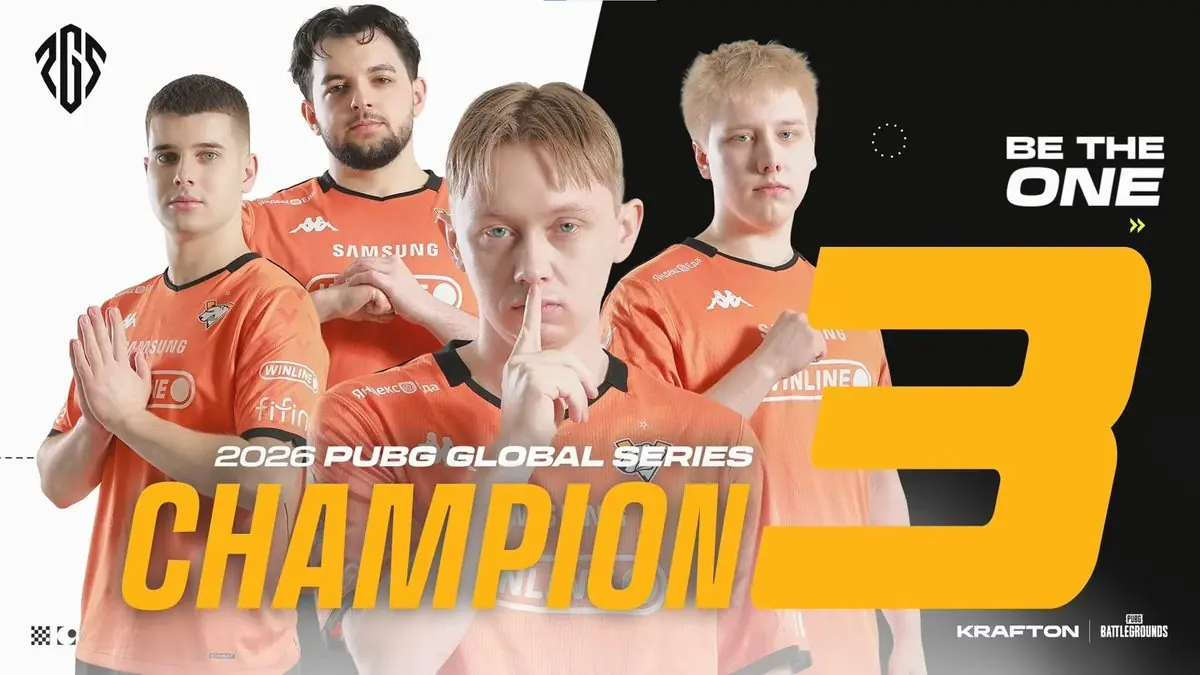
Virtus.pro just proved that point in the most brutal way possible. After getting eliminated in both PGS 1 and PGS 2, the team came back to absolutely demolish the PGS 3 Grand Final. 136 points. 89 kills. A 35-point gap over second place that wasn’t even close.
This wasn’t luck. This was surgical precision.
“Virtus.pro became the PGS 3 champion with 136 points (47 placement + 89 kills), finishing a massive 35 points ahead of second-place eArena. It was a result few could have predicted, as Virtus.pro had been eliminated in both PGS 1 and PGS 2 and had not earned a single PGS Point before PGS 3.” — PUBG on Steam
The numbers tell the whole story. 89 kills in the Grand Final means they averaged nearly 6 eliminations per match across 15 games. That’s not spray-and-pray gameplay. That’s calculated aggression backed by solid positioning and team coordination.
But here’s what makes this even more impressive: they balanced those kills with 47 placement points. Most teams that frag hard die early. Virtus.pro did both – they hunted and they survived.
Not everyone’s buying the redemption narrative though. Some fans are questioning how a team that couldn’t make it past early stages suddenly becomes unstoppable. The skill gap between tournaments shouldn’t be this massive. Either other teams choked hard or something changed in Virtus.pro’s approach that nobody saw coming.
The format also raised eyebrows. Having bottom teams fight through a Survival Stage while top seeds get direct Grand Final spots creates weird dynamics. Teams like eArena had to battle just to reach the final bracket, then faced fresh opponents who’d been studying their gameplay for weeks.
Others pointed out that three different champions across three tournaments might look exciting, but it also suggests inconsistent competition. When no team can repeat their success, that’s usually a sign of either incredible parity or teams that can’t maintain their level under pressure.
The memes write themselves though. “Virtus.pro speed-running from worst to first.” “PGS 1-2: tutorial mode. PGS 3: Virtus.pro remembers how to shoot.” “From zero PGS points to championship – that’s not character development, that’s a different character.”
Some players joked that Virtus.pro was just collecting data in the first two tournaments. “Classic Russian strategy – let enemy think you’re weak, then crush them when it matters.” The timing was almost too perfect to be accidental.
This result changes everything about how we view PUBG’s competitive scene. For two years, the meta has been about consistent placement and avoiding risky fights. Teams that played it safe and picked their battles usually won.
Virtus.pro just threw that playbook in the trash. They proved you can be aggressive and tactical at the same time. Their 89 kills weren’t random third-parties or lucky zone rotations. They were deliberate eliminations that also set up better positioning for late circles.
The fact that three different teams won the three tournaments also shows how volatile PUBG esports has become. Unlike other tactical shooters where top teams dominate for months, PUBG rewards adaptation and map knowledge over pure mechanical skill. Teams that can read the game state and adjust their strategy mid-match have huge advantages.
This also validates the circuit format. Having multiple tournaments prevents any one team from getting too comfortable. Petrichor Road won PGS 1, Natus Vincere took PGS 2, and now Virtus.pro owns PGS 3. That’s not luck – that’s proof the competition is deeper than anyone expected.
The tactical evolution is real too. Teams aren’t just playing for placement anymore. They’re hunting for eliminations while maintaining strong positioning. Virtus.pro’s 47 placement points prove they weren’t just fragging mindlessly – they were controlling space and rotations while taking fights.
What’s next? The PGS format proved it works, so expect more circuit-style competitions. Teams that can adapt quickly between tournaments will dominate. One-trick strategies won’t cut it anymore.
Virtus.pro also set a new standard for aggressive tactical play. Expect other teams to study their VODs and try to copy that kill-heavy approach. But copying strategy and executing it under pressure are different skills entirely.
The next PGS circuit can’t come soon enough. If this level of competition continues, PUBG esports just found its identity – tactical chaos where anything can happen and the best team wins through skill, not just luck.