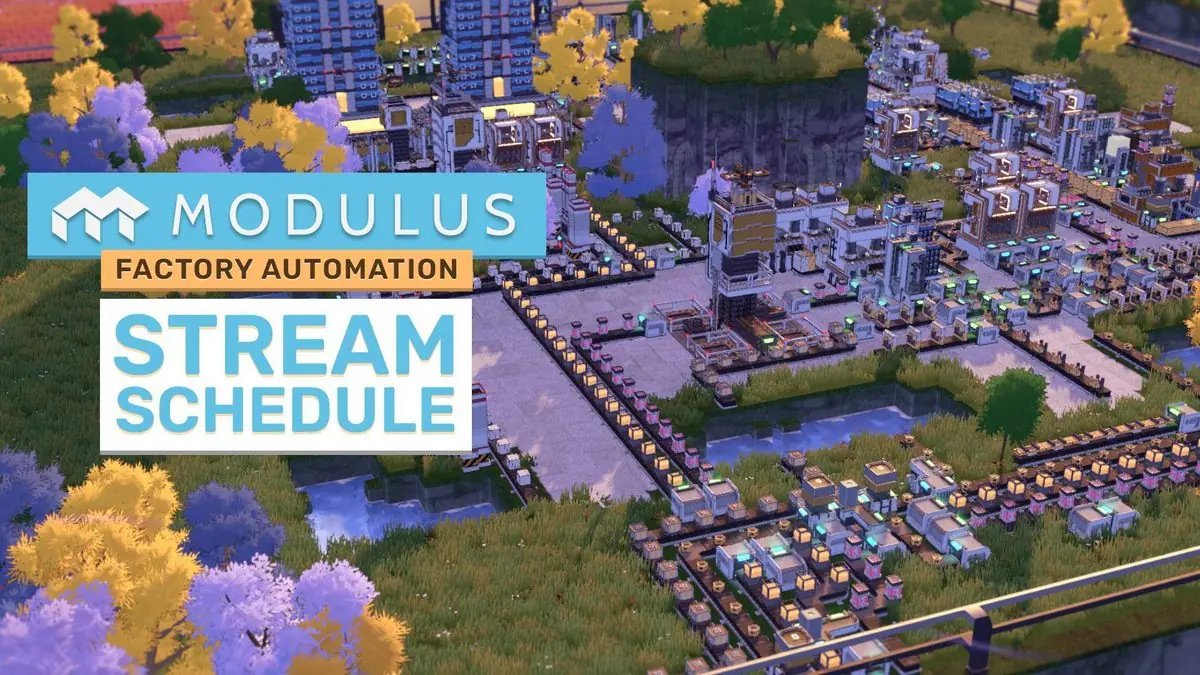
The factory floor has never looked so inviting. After years of careful cultivation, community feedback, and creative iteration, Modulus: Factory Automation has finally opened its doors on Steam today. This isn’t just another launch — it’s the culmination of a story that began with a simple question: what if factory automation could be both deeply strategic and genuinely relaxing?
Happy Volcano’s journey with Modulus reads like a love letter to collaborative development. From the very beginning, the team positioned community feedback as the cornerstone of their creative process. It’s rare to see developers embrace this level of transparency, but the results speak for themselves. The game that launched today bears the fingerprints of countless players who helped shape every system, every visual choice, every moment of gameplay flow.
“After years of development, iteration, and collaboration with our community, Modulus: Factory Automation is now available on Steam. Right from the word go, your feedback has helped shape every part of this experience. We set out to create a factory automation game that feels both deeply strategic and creatively relaxing; a place where efficiency and beauty can exist side by side.” — Modulus: Factory Automation on Steam
The phrase “efficiency and beauty can exist side by side” cuts to the heart of what makes Modulus intriguing. Traditional factory builders often prioritize pure optimization — cramming as much production into as little space as possible. Modulus seems to be asking a different question: what if your factory could be a work of art? What if the act of building could be meditative rather than stressful?
This philosophical shift reflects broader changes in how we think about productivity and creativity in gaming. The pandemic years taught us that relaxation and achievement don’t have to be mutually exclusive. Games like Animal Crossing and Stardew Valley proved that optimization can coexist with zen-like satisfaction. Modulus appears to be bringing that same energy to the industrial automation space.
Of course, not everyone is convinced that factory builders need to be “relaxing.” The genre has traditionally attracted players who thrive on complexity and challenge. Some veteran automation fans might worry that emphasizing beauty and relaxation could dilute the strategic depth that makes these games compelling. The question becomes whether Modulus can truly deliver on both fronts, or if this balance will feel like a compromise that satisfies neither camp completely.
The community response will likely determine Modulus’s long-term success. Factory automation games live or die by their modding communities and player-generated content. The fact that Happy Volcano has already built such strong community relationships during development bodes well for post-launch support and evolution.
Publisher Kwalee’s commitment to a week-long streaming schedule shows they understand the importance of community engagement in this space. Factory builders are inherently social games — players love showing off their creations and learning from others’ designs. The screenshot contest offering in-game featuring adds another layer of community integration that could help build lasting engagement.
What’s particularly compelling about Modulus’s launch story is how it reflects the changing relationship between developers and players. The days of “ship it and forget it” are long gone, especially in the indie space. Games like Modulus are developed in conversation with their communities, evolving based on real player needs rather than abstract design documents.
This collaborative approach has broader implications for the industry. When developers genuinely listen to feedback and iterate based on community input, they often discover ideas they never would have reached on their own. The result is games that feel more organic, more responsive to what players actually want rather than what developers think they should want.
Looking ahead, Modulus enters a crowded but passionate market. The factory automation genre has exploded in recent years, with everything from Factorio to Satisfactory to Dyson Sphere Program finding dedicated audiences. Success in this space requires more than just solid mechanics — it demands a unique perspective on what building and optimization can feel like.
The real test will be whether Modulus can maintain the community-driven spirit that shaped its development. With the game now live, the conversation shifts from “what should this be?” to “where do we go next?” If Happy Volcano can keep that collaborative energy flowing, they might have built something special — not just a factory automation game, but a blueprint for how community-driven development can create experiences that neither developers nor players could have imagined alone.