Ever hit that perfect moment in a puzzle game where everything just clicks? That feeling when your brain finally cracks the code and you build something that’s lowkey a masterpiece? That’s exactly what happened to one Opus Magnum player who just had to share their pride.
For those who don’t know, Opus Magnum is this wild puzzle game from Zachtronics where you’re basically an alchemist building these insane contraptions to make gold and stuff. It’s giving big brain energy mixed with steampunk vibes. The whole game is about creating these mechanical solutions that look like something a mad scientist would cook up.
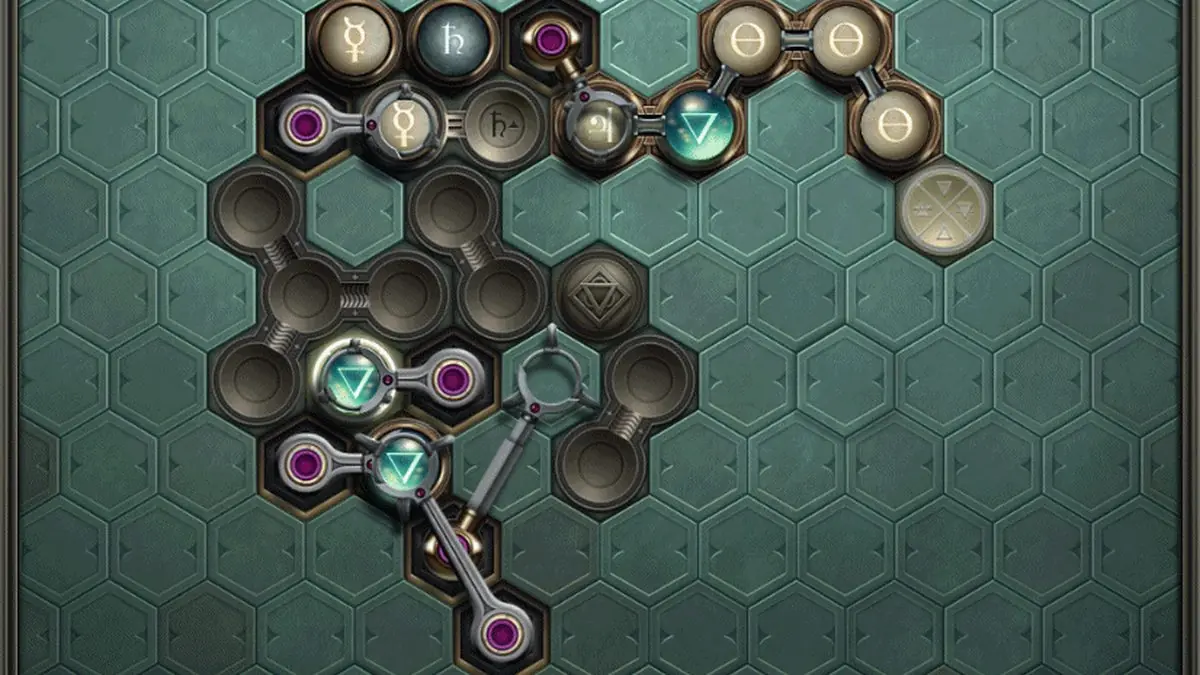
So when a player gets excited enough to post about their creation, you know they’ve made something special. Reddit user LordHayati recently dropped this gem on r/gaming:
“Of the stuff I’ve made in Opus magnum, this is my favorite.” — u/LordHayati on r/gaming
Now that might seem like a simple post, but anyone who’s played Opus Magnum knows that feeling. When you finally nail a solution that’s not just functional but actually elegant? That hits different. It’s like solving a Rubik’s cube but if the cube was also a Rube Goldberg machine.
The thing about Opus Magnum is that there’s no single “right” way to solve anything. You could have ten different players tackle the same puzzle and get ten completely different contraptions. Some go for speed, others optimize for cost, and some just want their solution to look absolutely unhinged in the best way possible.
This is what makes Zachtronics games so addictive. They’re not just puzzles — they’re creative playgrounds. You’re not just finding solutions, you’re expressing yourself through mechanical engineering. It’s giving engineering student meets artist vibes, and honestly? We’re here for it.
Opus Magnum dropped back in 2017, but the community is still going strong. There’s something about these kinds of games that keeps players coming back. Maybe it’s the satisfaction of optimization, or the way a perfect solution feels like poetry written in gears and pistons.
The game has this whole aesthetic too — all steampunk alchemy with transmutation circles and mechanical arms doing their little dances. Watching a well-designed solution run is oddly mesmerizing. It’s like mechanical ASMR but for your brain.
What’s really cool is how personal these creations become. Every player develops their own style, their own approach to problem-solving. Some are minimalists who want the cleanest possible solution. Others are maximalists who build these elaborate Rube Goldberg contraptions just because they can.
And that’s the beauty of games like this — they’re not just about winning or losing. They’re about expression, about finding your own path through a problem. When LordHayati says this is their favorite creation, they’re not just talking about efficiency or elegance. They’re talking about a piece of themselves.
The puzzle game scene has been pretty solid lately. We’ve got everything from the chill vibes of A Good Snowman Is Hard To Build to the absolute brain-melting complexity of games like SpaceChem (another Zachtronics classic). But there’s something special about Opus Magnum that keeps pulling people in.
Maybe it’s the perfect balance of accessibility and depth. New players can stumble through solutions and feel accomplished, while veterans can spend hours perfecting the most efficient possible design. It’s a game that grows with you.
So what’s next for the puzzle gaming community? Well, Zachtronics might be done making games (RIP to the kings), but their legacy lives on. Other developers are picking up the torch, creating new ways for players to express their creativity through problem-solving.
And for players like LordHayati? They’ll keep building, keep optimizing, keep sharing those moments when everything clicks into place. Because at the end of the day, that’s what gaming is about — those perfect moments when you create something you’re genuinely proud of, even if it’s just made of virtual gears and alchemical symbols.
That feeling of digital craftsmanship? It’s never going out of style.