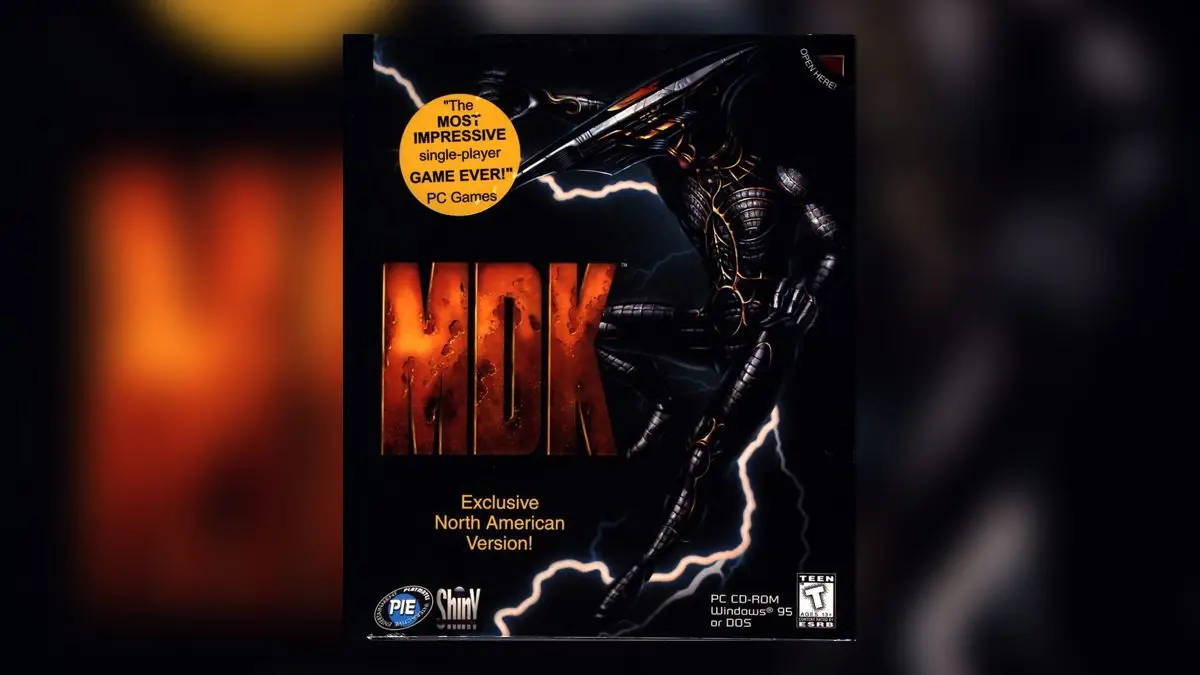
In an era where gaming violence sparked congressional hearings and parents clutched their pearls, one title stood defiantly in the crosshairs: MDK. This third-person shooter didn’t just push boundaries—it obliterated them with a sniper rifle and a wicked sense of humor.
The game’s very name became part of gaming folklore. While officially standing for nothing more scandalous than the developer’s initials, players whispered that MDK really meant “Murder Death Kill.” Whether true or not, the rumor perfectly captured the game’s gleefully violent spirit.
“This game was a blast… I do remember it being my first M rated title. What I do remember though was that it was a lot of fun, and pretty hard at the time… MDK was rumoured to be short for Murder Death Kill and it encouraged sniping headshots and nuking things. It was a fantastic game, hilarious and gruesome” — u/MurkyUnit3180 on r/gaming
For countless young gamers, MDK served as their baptism into M-rated territory. This wasn’t just another shooter—it was a rite of passage wrapped in dark comedy and explosive action.
Meanwhile, the technical divide between platforms told its own story. PC players enjoyed the definitive experience, with superior graphics and performance that showcased the game’s ambitious design. PlayStation owners got a functional but compromised port, highlighting the platform wars that would define the decade.
Notably, MDK arrived at a pivotal moment for the industry. The Entertainment Software Rating Board had just established the M rating in 1994, and developers were still testing how far they could push content boundaries. MDK became a case study in walking that tightrope between controversy and creativity.
The game’s design philosophy reflected a uniquely 90s sensibility. Where modern shooters often take themselves seriously, MDK reveled in absurdity. Players donned a skin-tight suit and wielded increasingly ridiculous weapons while maintaining pinpoint accuracy for those signature headshots. The juxtaposition of precision sniping with over-the-top action created something genuinely unique.
This approach influenced a generation of developers who learned that violence could be both visceral and humorous without becoming exploitative. Games like Serious Sam and later Bulletstorm would echo MDK’s irreverent tone, proving the formula’s lasting appeal.
The platform performance gap also foreshadowed industry trends. PC gaming was entering its golden age of technical superiority, while console ports often struggled to match their computer counterparts. This dynamic would persist until hardware caught up years later.
MDK’s legacy extends beyond its immediate impact. The game demonstrated that smaller studios could compete with industry giants through creativity rather than pure budget. Its success paved the way for other ambitious indie projects willing to take creative risks.
The sniping mechanics, meanwhile, predated the precision shooting that would become standard in later titles. While games like GoldenEye 007 popularized console sniping, MDK was quietly perfecting the art on PC platforms.
Today’s gaming landscape bears little resemblance to MDK’s era. Modern shooters emphasize competitive multiplayer and live service models over single-player campaigns. The irreverent humor that defined 90s gaming has largely given way to more serious storytelling approaches.
Yet MDK’s influence persists in unexpected places. Independent developers continue drawing inspiration from its fearless approach to content and tone. The game’s willingness to embrace both comedy and violence without apologizing for either remains refreshingly honest.
The industry’s current obsession with battle royales and hero shooters makes MDK feel almost quaint by comparison. Here was a game that simply wanted players to have fun shooting things in increasingly creative ways. No microtransactions, no season passes—just pure, unfiltered gaming entertainment.
As retro gaming continues growing in popularity, MDK deserves recognition alongside more famous 90s classics. It captured lightning in a bottle during a unique period when developers could take bigger creative risks without focus group interference.
Whether the acronym truly meant “Murder Death Kill” may remain forever unclear. What’s certain is that MDK murdered expectations, killed conventional wisdom, and left an indelible mark on gaming history. Not bad for a forgotten shooter that dared to be different.