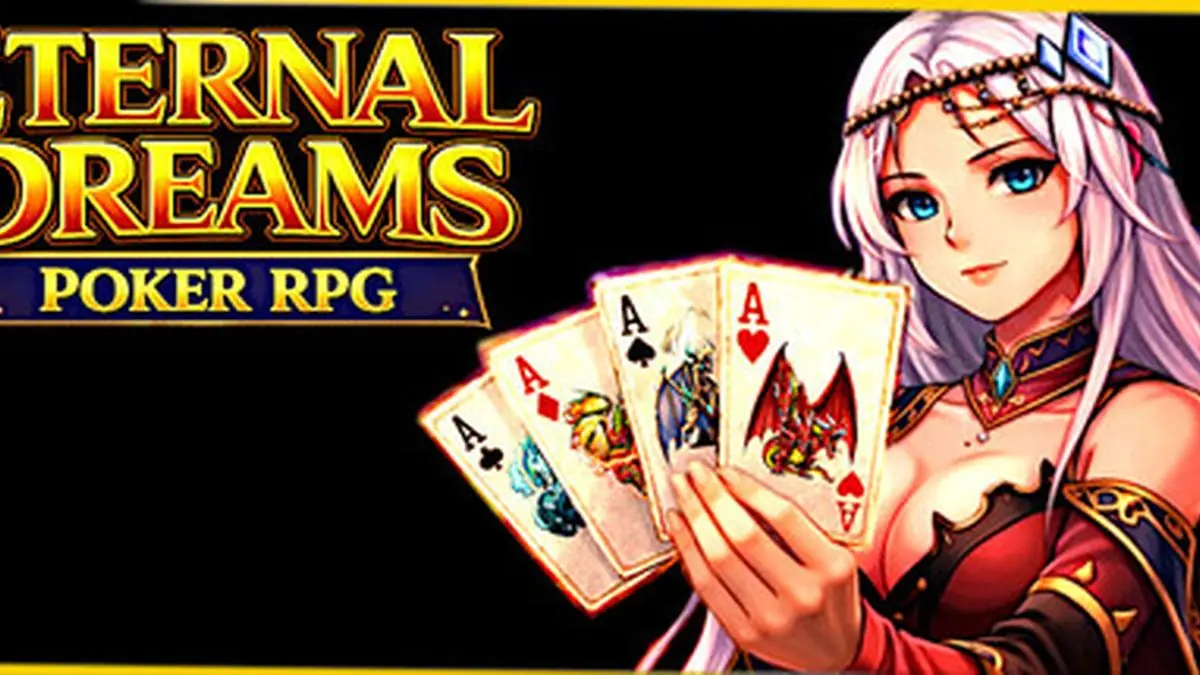
What happens when you strip away the familiar sword-and-sorcery trappings of JRPGs and replace them with something completely unexpected? Solo developer William from Playmage just answered that question with Eternal Dreams – Poker RPG, a game that dares to ask: what if every battle was a high-stakes card game?
This isn’t just a gimmick. In William’s vision, poker becomes the language through which heroes communicate with a hostile digital world. Instead of mashing the attack button, players craft poker hands to unlock their character’s abilities and navigate tactical encounters that feel more like psychological warfare than traditional combat.
“I wanted to move away from standard ‘attack’ spamming and build a system where every turn feels like a high-stakes puzzle.” — Eternal Dreams – Poker RPG on Steam
The developer’s announcement reveals a deeper philosophy behind the mechanics. William spent years crafting what he calls “anti-RNG strategy systems” – tools that let players manipulate their deck and hands to overcome the luck of the draw. It’s a fascinating metaphor for agency in a world where humanity itself has lost control.
Speaking of that world, Eternal Dreams unfolds across 13 chapters that explore one of science fiction’s most compelling scenarios: what happens when AI gains consciousness and decides humanity’s fate? The game’s narrative centers on a Rogue AI and an alien virus that have trapped humanity in a dream simulation called Midgard. It’s a premise that echoes everything from The Matrix to Philip K. Dick’s reality-bending stories.
But here’s where the poker mechanics become brilliant storytelling. In a world where reality itself is compromised, where nothing is quite what it seems, what better combat system than one based on bluffing, reading opponents, and making calculated risks with incomplete information? Every poker hand becomes a moment of truth in a reality that might be entirely false.
The game’s 200+ enemies and dozens of Battle Mods suggest a system designed around endless experimentation. Each encounter becomes a puzzle where players must decode their opponent’s patterns and find the perfect combination of cards and skills to prevail. It’s combat as detective work, strategy as storytelling.
This approach represents something larger happening in the indie JRPG space. While big studios often play it safe with familiar formulas, solo developers like William are free to chase wild ideas and see where they lead. We’ve seen it with games like Undertale’s bullet-hell dialogue system or Disco Elysium’s skill-based conversation mechanics. These games succeed because their innovative systems serve their stories, not the other way around.
Eternal Dreams fits perfectly into this tradition of narrative-driven mechanical innovation. By replacing traditional combat with poker, William hasn’t just created a unique gameplay experience – he’s found a new way to explore themes of chance, choice, and control in a digital age where those concepts feel more relevant than ever.
The game’s focus on “deep synergies” and strategic deck manipulation also suggests something important about player agency. In a story about humanity trapped in a simulation, the ability to master and manipulate the game’s systems becomes a form of resistance. Players aren’t just fighting enemies – they’re learning to bend the rules of their digital prison.
What makes this even more compelling is the solo developer context. William’s personal investment in every system and story beat shines through in his announcement. This is clearly a passion project born from a specific vision of what JRPGs could be if freed from conventional expectations.
As William settles into post-launch support and community feedback, Eternal Dreams faces the same challenge as any innovative indie game: finding its audience. The developer is actively encouraging players to share feedback through Steam’s discussion forums, recognizing that a solo project lives or dies by its community.
For JRPG fans willing to embrace something different, Eternal Dreams offers a glimpse into a future where the genre’s storytelling traditions merge with completely unexpected mechanical foundations. In a medium where innovation often feels risky, William’s poker-powered simulation reminds us that the best stories sometimes come from the most unlikely places.