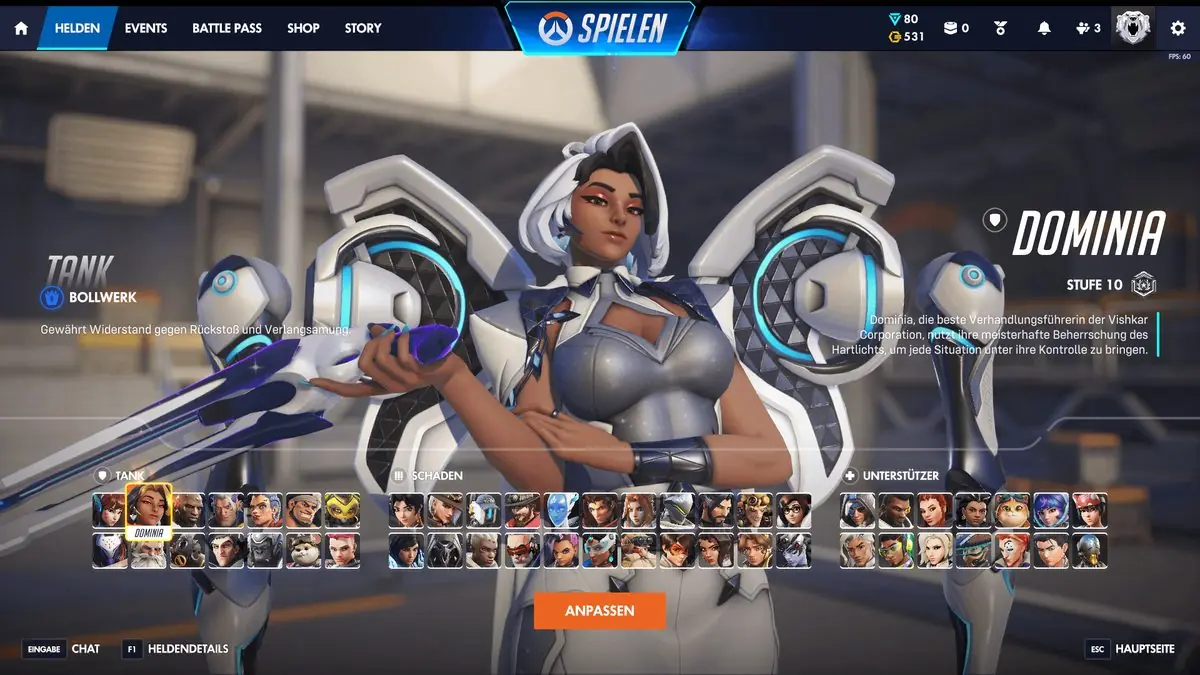
Ever notice how games can be totally different depending on where you play them? Well, Overwatch players just discovered a pretty amusing example of this when someone pointed out that Domina has a completely different name if you’re playing in German.
The discovery came from a Reddit user who shared what they called a “fun fact” about the game’s German localization. It turns out there’s a good reason why German players hear something different when Domina’s name comes up.
“Fun Fact: If you play the game with german text, Domina will be called ‘Dominia’ in all Voicelines and Text mentions. This is because Domina literally means Dominatrix in german. Are there any other region specific names in other countries?” — u/Kreidebleich on r/Overwatch
So yeah, Blizzard had to get creative with the name because “Domina” has some pretty specific adult connotations in German. Instead of dealing with potential awkwardness or rating issues, they just tweaked it to “Dominia” and called it a day. Smart move, honestly.
This kind of thing happens way more than we might think. Game developers have to walk a tightrope when they’re releasing games worldwide. What sounds totally fine in English might be inappropriate, offensive, or just plain weird in another language. And it’s not just about direct translations either — cultural context matters huge.
We’ve seen this before in gaming. Remember when Pokémon had to change Jynx’s design because of cultural sensitivity issues? Or how about all those times Nintendo had to change character names between Japanese and English releases because the original names just didn’t work? Even something as simple as a character’s outfit might need changes depending on local standards.
The thing is, most of us probably never notice these changes unless someone points them out. We just play our version of the game and assume everyone else is getting the same experience. But behind the scenes, localization teams are working overtime to make sure everything makes sense for each region.
It’s actually pretty impressive when you think about it. These teams have to understand not just languages, but humor, cultural references, and even local laws. A joke that lands perfectly in one country might be completely lost in another, or worse, might accidentally offend people.
For Overwatch specifically, this kind of attention to detail makes sense. The game has players from all over the world, and Blizzard wants everyone to feel comfortable and included. A small name change like this might seem minor, but it shows they’re thinking about their global community.
The Reddit post asking about other region-specific changes is actually a really good question. We bet there are tons of examples we don’t know about. Maybe character abilities get renamed, or certain voice lines are completely different, or visual elements get tweaked for different markets.
This also makes us think about how challenging it must be for esports. When Overwatch League players are competing internationally, do they all use the same character names in comms? Or do they stick to whatever names they learned in their home regions? That could get confusing fast.
What’s really cool is how the community discovered and shared this. It shows how connected we all are as players, even when we’re literally playing different versions of the same game. Someone noticed something interesting about their local version and decided to share it with everyone else.
Going forward, we’re probably going to see more of these localization quirks as games get bigger and more global. Developers are getting better at thinking internationally from the start, but there will always be surprises. Cultural differences are complex, and no team can predict every single issue that might come up.
The good news is that these changes usually make games better for everyone. When developers take the time to properly localize content, it means we all get to enjoy games that feel natural and appropriate for our own communities. Sure, it might mean some of us are missing out on certain jokes or references, but it also means we’re not accidentally playing something that feels weird or uncomfortable.
As for what other region-specific names might be hiding in our games? Well, now we’re all going to be looking out for them. And honestly, that sounds like a fun community project — mapping out all the different ways our favorite games change around the world.