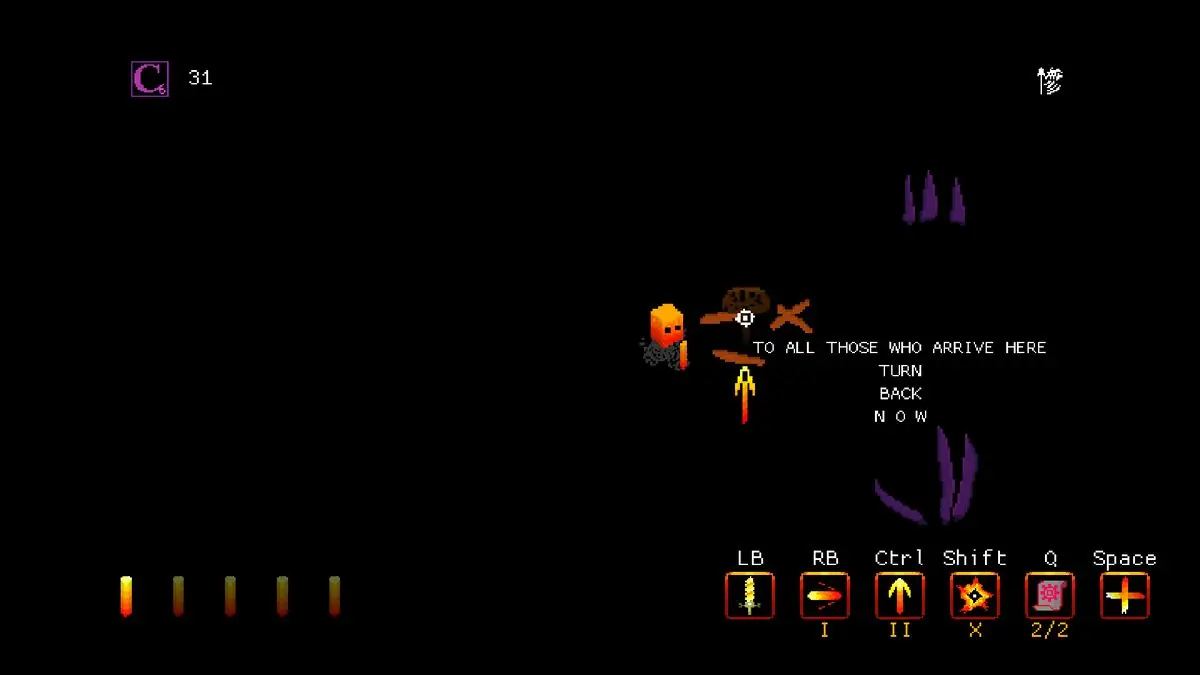
The Metroidvania genre just got its most twisted entry yet. Nothing Beyond This Point launched today on Steam, and developer Dieuwt has crafted something that fundamentally challenges how we think about health systems in exploration games.
Most Metroidvanias teach players to be cautious. Preserve your health, avoid damage, retreat when things get dicey. Nothing Beyond This Point throws that playbook out the window. Here, health isn’t something to protect—it’s ammunition.
“Nothing Beyond This Point is OUT NOW! The Void beckons! Nothing Beyond This Point, the strange Metroidvania with infinite regeneration, spending health as damage, and navigation instead of platforming… It’s out. It has launched. Go get it, it’s great and very affordable and definitely not terrifying!” — @Dieuwt
The core mechanic is brilliantly simple yet radical. Players regenerate health infinitely, but dealing damage requires spending that health. There’s no contact damage from enemies, which means the traditional dance of hit-and-run combat gets replaced with something far more aggressive. The developer’s advice says it all: “play aggressively. Don’t let enemies heal or live for long.”
This design choice represents a notable departure from genre conventions established by classics like Super Metroid and Castlevania: Symphony of the Night. Those games built tension through resource management—every bit of health mattered, every save room was a relief. Meanwhile, Nothing Beyond This Point creates tension through offensive commitment. The question isn’t “can I afford to take this hit?” but rather “can I afford to throw this punch?”
The navigation focus over traditional platforming suggests another interesting evolution. Many modern Metroidvanias have leaned heavily into precise jumping puzzles and timing-based challenges. Nothing Beyond This Point seems more interested in spatial reasoning and exploration, which aligns with its health-as-resource combat system. When you’re not worried about fall damage or enemy contact, the level design can prioritize different kinds of challenges.
Historically, successful Metroidvania mechanics tend to be those that solve existing friction points in the genre. The infinite regeneration system here addresses one of the most common player frustrations: being stuck in an area with low health and no way to recover. By making health both infinite and expendable, Dieuwt has potentially solved the “health gate” problem that has plagued many exploration games.
The developer’s transparency about achievement design is also worth noting. All achievements except hard mode completion are obtainable in a single playthrough, which suggests confident level design. Games that require multiple runs for basic completion often do so to mask shallow content. Nothing Beyond This Point appears comfortable letting players experience everything it has to offer upfront.
The mention of secret bosses adds another layer of intrigue. Optional content in Metroidvanias often serves as the true test of a player’s mastery of the game’s systems. If Nothing Beyond This Point’s secret encounters are built around the spend-health-for-damage mechanic, they could offer genuinely unique boss fight experiences.
Technically, the game supports both controller and keyboard-mouse inputs, though the developer recommends the latter. This preference often indicates complex input requirements that benefit from precision pointing or quick access to multiple buttons. Given the emphasis on aggressive combat, this could mean the game features more action-oriented elements than typical for the genre.
The Steam launch comes at an interesting time for indie Metroidvanias. The market has seen everything from pixel-perfect homages to the classics to radical reinventions like Guacamelee’s combat focus or Axiom Verge’s horror atmosphere. Nothing Beyond This Point appears to stake out new territory in the mechanical innovation space.
Looking ahead, the game’s reception will likely depend on how well its central mechanic holds up over a full campaign. Novelty can carry a game through its opening hours, but lasting appeal requires depth. The infinite regeneration system needs to create meaningful tactical decisions throughout the experience, not just serve as an initial hook.
The emphasis on affordability and the developer’s direct appeal for reviews suggests this is a passion project from a smaller studio. These kinds of experimental games often live or die based on word-of-mouth discovery, which makes the launch window crucial.
For players who’ve exhausted the recent wave of Metroidvania releases, Nothing Beyond This Point offers something genuinely different. Whether that difference translates into lasting enjoyment will depend on execution, but the core concept shows real promise. In a genre often defined by what players can’t do, a game built around infinite possibility feels refreshingly bold.