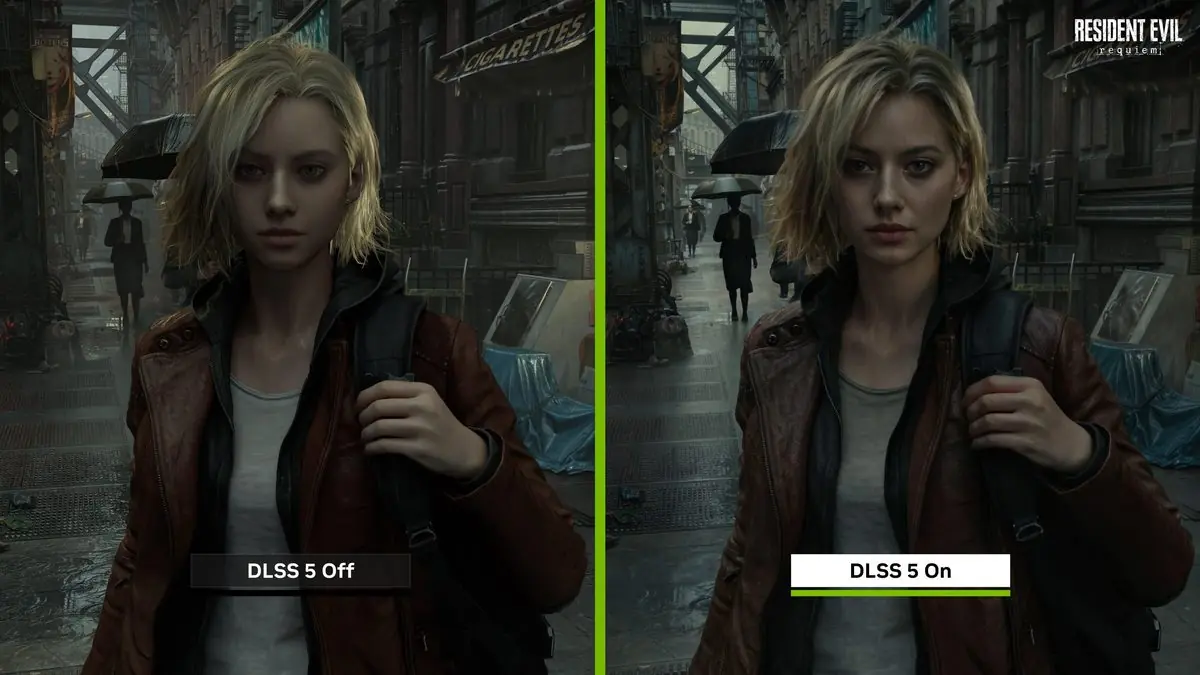
Remember when we dreamed of photorealistic graphics in games? Well, be careful what you wish for. Nvidia just dropped DLSS 5 with something called ‘photoreal’ graphics alterations, and the gaming world is having a total meltdown. Think Blade Runner’s replicants trying to pass as human – except gamers can spot the fake from a mile away.
The announcement hit like a plasma grenade in the community. What Nvidia is calling a breakthrough, players are calling something way less flattering.
“This is just a garbage AI Filter”: Nvidia met with criticism for DLSS 5’s ‘photoreal’ graphics alterations — r/gaming discussion
The thread exploded with gamers tearing apart Nvidia’s latest tech. It’s like watching the Rebel Alliance take on the Death Star, except instead of destroying a space station, they’re destroying marketing hype. Players are saying this ‘photoreal’ feature just slaps an AI filter over everything, making games look fake and plasticky.
The criticism isn’t just about graphics looking weird. Gamers are worried this is another step toward AI taking over creative decisions. They want authentic art direction, not some algorithm deciding what looks ‘real.’ It’s the classic sci-fi fear – machines thinking they know better than humans.
Some players compared it to those terrible AI upscaling filters that make old movies look like soap operas. Others said it feels like Instagram filters for video games. Nobody wants their gritty cyberpunk thriller looking like a Disney movie.
This whole mess taps into something bigger brewing in gaming right now. We’re living through our own version of the AI revolution that sci-fi warned us about. Every month, some new AI tool promises to ‘enhance’ our games, but players are pushing back hard.
Think about it – we’ve got AI writing dialogue, AI generating textures, AI creating music, and now AI deciding what our games should look like. It’s starting to feel like that Black Mirror episode where technology ‘improves’ everything until it loses all soul.
The DLSS tech itself used to be pretty cool. Frame generation and upscaling? That’s useful stuff that makes games run better without changing the art. But this new ‘photoreal’ thing crosses a line for many players. They see it as Nvidia trying to fix something that isn’t broken.
Game developers spend years crafting visual styles. Imagine working on a dark, moody horror game only to have some AI filter make everything look like a bright nature documentary. That’s the nightmare scenario players are worried about.
The backlash also shows how much gamers value authenticity. In a world full of deepfakes and AI-generated everything, gaming has been this last bastion of human creativity. Players can smell artificial enhancement from across the galaxy, and they don’t like it.
This isn’t just about graphics either. It’s about trust. If Nvidia can slip in AI alterations that nobody asked for, what’s next? Will future DLSS versions start changing gameplay elements? Will they decide your character’s facial expressions need ‘enhancement’?
The community reaction feels like a turning point. Players are drawing a line in the digital sand, saying some things shouldn’t be ‘improved’ by AI. They want tools that help performance, not tools that change artistic vision.
Looking ahead, Nvidia has some serious damage control to do. They might need to make this feature optional or even scrap it entirely. The gaming community has spoken, and it sounds a lot like HAL 9000 getting unplugged.
This controversy could reshape how graphics companies approach AI features. Maybe the future isn’t about making everything ‘photoreal.’ Maybe it’s about giving players the power to choose their own visual experience.
We’re probably going to see more AI graphics tools in the coming months, but this backlash sends a clear message. Players want their games to look good, not look ‘corrected.’ The sci-fi future we’re heading toward better include some human choice in the mix, or the resistance is going to get a lot louder.