The Nintendo Wii turns 20 this year. That little white box just hit legal drinking age. Time to pour one out for the console that made hardcore gamers eat their words.
Back in 2006, the gaming world was locked in a graphics arms race. Xbox 360 and PS3 were throwing around HD resolutions and processing power like they were competing for military contracts. Then Nintendo rolled up with motion controls. Most of us laughed.
We were wrong. Dead wrong.
The Wii didn’t need cutting-edge graphics to dominate the battlefield. It had something better: accessibility. Your grandmother could pick up that Wiimote and nail a perfect bowling strike in Wii Sports. Your dad could throw haymakers in Wii Boxing without looking like a complete amateur.
That’s tactical brilliance right there. Nintendo flanked the entire industry while everyone else was focused on the wrong objectives.
“Nintendo Wii turns 20 this year. Soon you will be able to take it out drinking with you.” — u/gorginhanson on r/gaming
The motion controls weren’t perfect. Any serious gamer will tell you that. Waggle controls in some games felt like flailing around with broken equipment. The precision wasn’t there for competitive play. But that missed the point entirely.
Wii Sports was the real masterpiece. Five simple games that taught an entire generation how motion controls worked. Tennis gave you proper swing mechanics. Bowling taught weight transfer. Boxing showed you footwork and timing. It was like basic training for motion gaming.
Nintendo didn’t just sell 101 million units by accident. They identified an untapped market and executed a perfect strategy. While Sony and Microsoft fought over the same demographic, Nintendo went after everyone else.
Smart move. Devastating effectiveness.
The hardcore gaming community complained about “casual” games flooding the market. Fair criticism in some ways. Shovelware piled up like empty shell casings. But the Wii proved something important: gaming could be for everyone.
That lesson stuck. Look around now. Motion controls are everywhere. VR headsets use the same basic principles the Wii pioneered. PlayStation Move, Xbox Kinect, Nintendo Switch Joy-Cons – they all trace back to that original Wiimote design.
The technical limitations were real. Graphics looked dated compared to the competition. Online features were basically nonexistent. Third-party support was inconsistent at best.
But none of that mattered in the end.
What mattered was innovation under fire. Nintendo took a massive risk with an unproven control scheme. They could have played it safe and built another traditional console. Instead, they changed the rules of engagement completely.
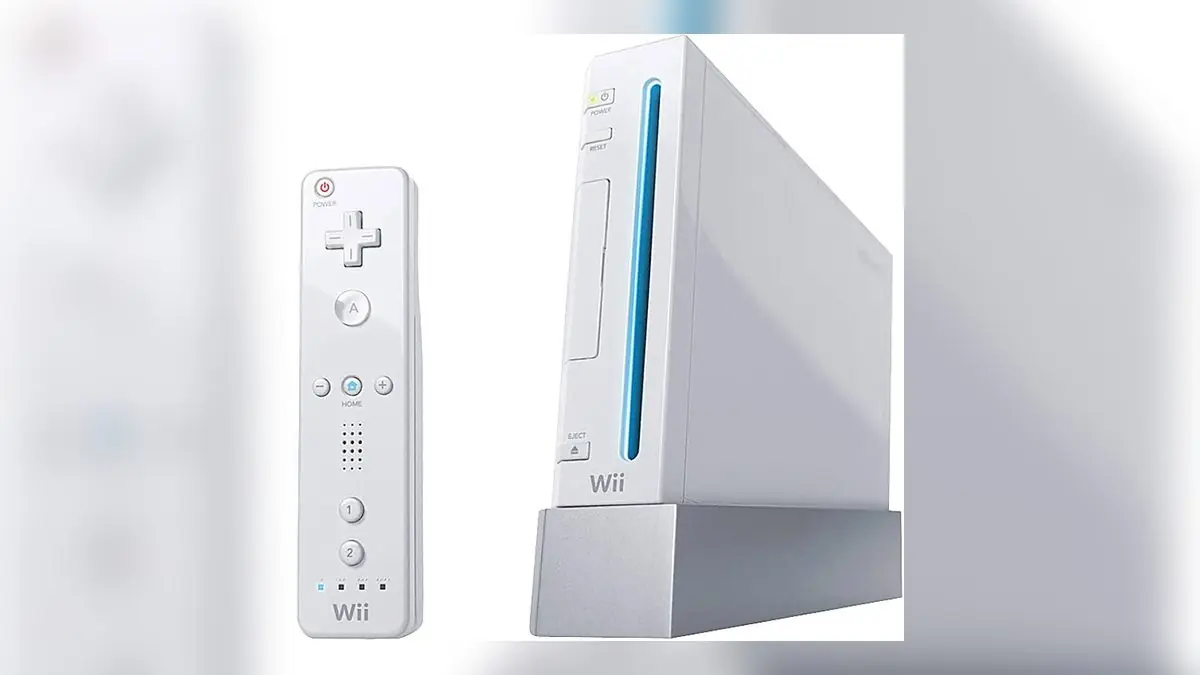
The Wii Remote became one of the most recognizable gaming peripherals ever made. Simple white controller. Blue LED ring. Wrist strap that saved countless TVs from destruction. Clean, functional design that did exactly what it needed to do.
No unnecessary bells and whistles. Just effective hardware built for its mission.
Twenty years later, we’re still feeling the impact. The Nintendo Switch borrowed heavily from Wii concepts – motion controls, local multiplayer, accessible gameplay. Ring Fit Adventure proved fitness gaming still has legs. Mario Kart continues to dominate living rooms worldwide.
Even VR owes a debt to the Wii. Room-scale movement, hand tracking, gesture recognition – all concepts that got their first real workout on Nintendo’s console.
The gaming industry learned valuable lessons from the Wii era. Innovation beats raw power when executed correctly. Accessibility opens new markets. Simple concepts often work better than complex ones.
So here’s to the Nintendo Wii on its 20th birthday. The little console that could – and did. It proved that sometimes the best strategy is the one nobody sees coming.
Time to crack open a cold one and fire up Wii Sports Resort. Some classics never get old.