
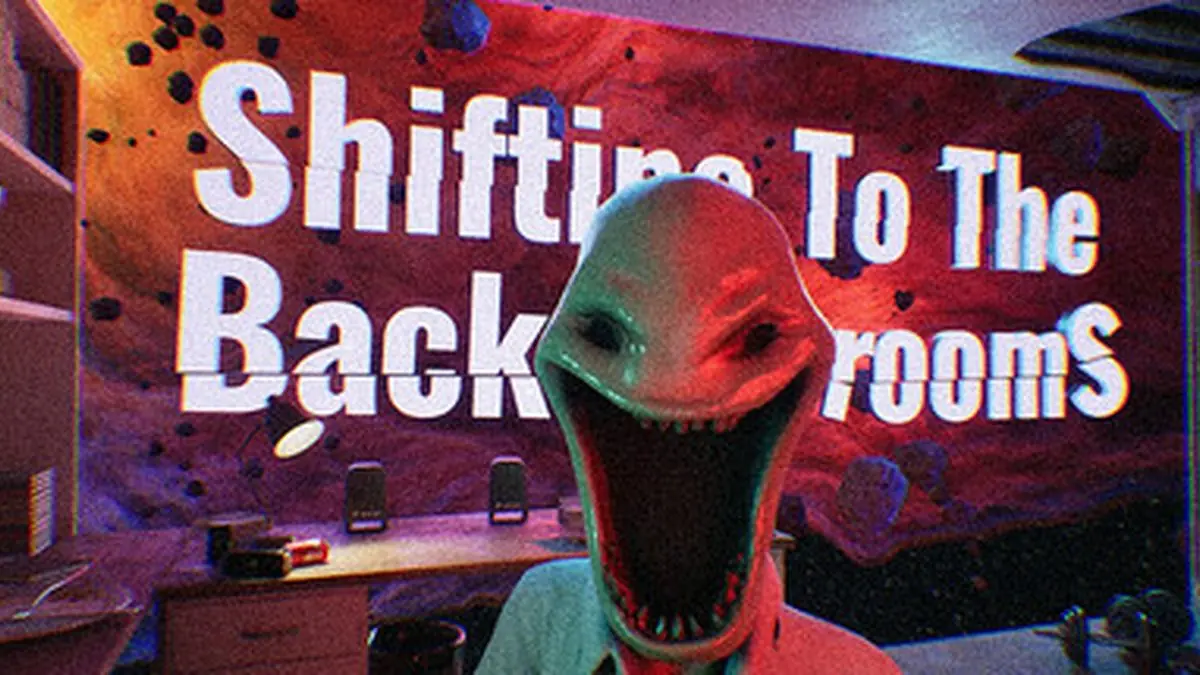
The Backrooms have escaped containment. What started as a creepy 4chan post about endless yellow rooms has evolved into one of the internet’s most haunting digital folklore concepts. Now, indie developer Arty has brought this nightmare to life in Shifting To The Backrooms, which just launched on Steam.
If you’ve never fallen down the Backrooms rabbit hole, imagine if The Stanley Parable had a panic attack in an abandoned office building. It’s liminal space horror at its finest — the kind of existential dread that makes you question every flickering fluorescent light you’ve ever walked under.
Arty’s announcement hit Steam with the excitement of a developer who just survived their own personal hero’s journey:
“Shifting To The Backrooms is out now! Thank you for everyone who supported STTB and was with us throughout the entire path to release! Have fun! <3” — @Arty
There’s something beautiful about an indie dev thanking their community like they just returned from a quest in the very backrooms they’re depicting. The gratitude feels genuine — like someone who knows exactly how many sleepless nights went into capturing that perfect feeling of being lost in an impossible space.
The development journey for any Backrooms game has to be tricky. How do you turn an abstract concept about infinite mundane spaces into engaging gameplay? It’s like trying to make a fun game about being stuck in an elevator, but the elevator is actually a dimension-hopping nightmare that stretches forever.
Other indie horror devs have tackled similar challenges, but the Backrooms concept is particularly unforgiving. Too much action and you lose the oppressive boredom that makes it scary. Too little and players get actually bored instead of existentially terrified. It’s a razor-thin line between atmospheric dread and watching paint dry in yellow rooms.
The timing feels perfect though. Horror games are having a moment, and the Backrooms have become this generation’s equivalent of classic creepypasta. It’s digital folklore that started in forum posts and evolved into YouTube videos, TikTok content, and now full games. We’re watching internet mythology become interactive entertainment in real time.
What makes the Backrooms so compelling is how it taps into something primal about modern life. Those endless office spaces, the fluorescent lighting, the carpet that looks like it hasn’t been changed since the 80s — it’s the horror of corporate mundanity taken to its logical extreme. It’s like if Kafka wrote Office Space but made it actually terrifying.
The concept has spawned multiple “levels” and entities in its expanded universe, turning what started as a simple creepy image into something that rivals SCP Foundation for pure world-building creativity. Different levels have different rules, different dangers, different ways to get completely lost. It’s collaborative storytelling that happens to be absolutely terrifying.
Shifting To The Backrooms joins a growing library of games exploring liminal space horror. From The Stanley Parable to Control to countless indie experiments, developers are figuring out how to make the familiar feel impossibly wrong. It’s sci-fi horror that doesn’t need aliens or spaceships — just the spaces we know turned into something they shouldn’t be.
The Steam release opens this particular slice of internet nightmare to a much bigger audience. Console players and casual horror fans who might never have stumbled across Backrooms videos on YouTube can now experience that specific kind of dread firsthand. It’s like introducing someone to cosmic horror by dropping them directly into an eldritch library.
What’s next for Backrooms games? Probably more levels, more entities, more ways to get lost in impossible geometry. The source material keeps expanding as internet communities add new layers to the mythology. VR versions are probably inevitable — and probably terrifying beyond belief.
Arty’s successful launch might inspire other developers to tackle different aspects of internet folklore. We could see games based on other creepypasta concepts, other liminal spaces, other ways that the internet has collectively decided to scare itself. The Backrooms proved that digital folklore can become legitimate entertainment properties.
For now though, Shifting To The Backrooms represents something special — the moment when internet mythology becomes interactive reality. It’s the kind of cultural evolution that would make anthropologists from the future very confused and probably a little concerned about what we chose to turn into games.