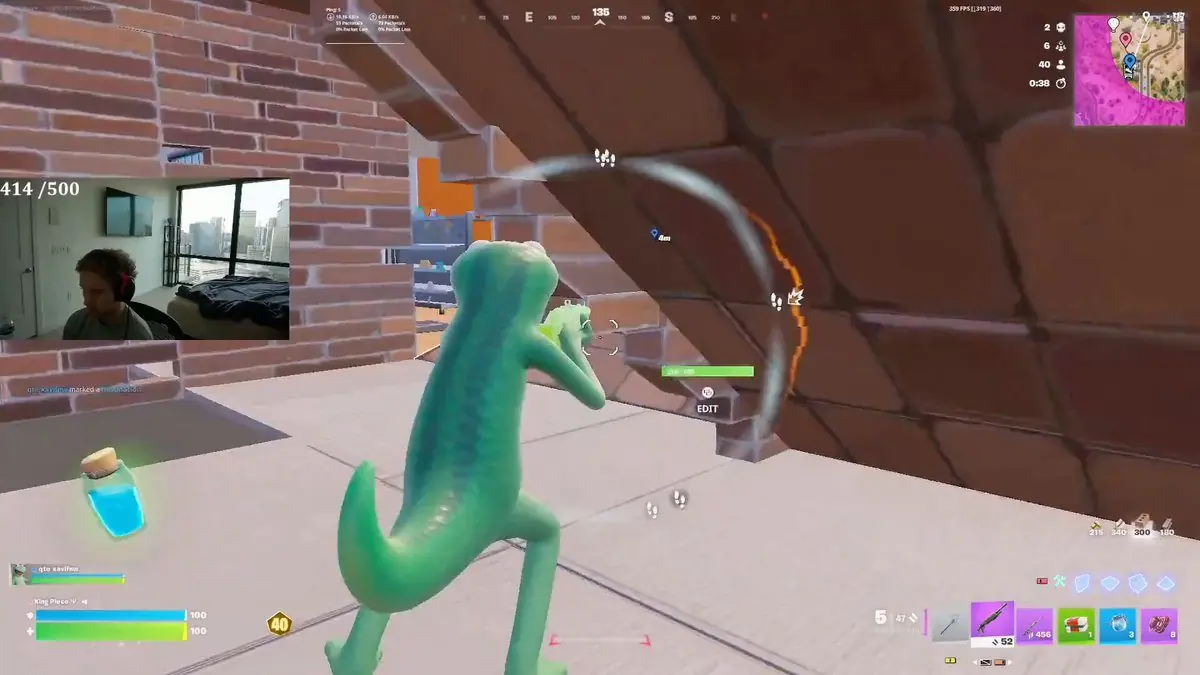
Picture this: you’re watching the game-winning play, but instead of picking a side, you get to see it unfold from both teams’ perspectives. That’s exactly what happened when footage of a competitive showdown between Reet and Clix hit the gaming community this week.
The dual point-of-view format isn’t just a cool gimmick — it’s changing how we consume competitive gaming content. When you can watch both players’ screens simultaneously, every micro-decision becomes crystal clear. You see the mind games, the split-second reactions, the moments where one player gains that crucial edge.
“Reet vs Clix both POV’s👀” — @userisstack
The gaming community’s response tells the whole story. This isn’t just another highlight reel getting lost in the noise. Players and fans are hungry for this kind of content because it delivers something traditional broadcasts can’t — complete transparency.
Think about it like watching game film in professional sports. Coaches don’t just want to see the quarterback’s view or the receiver’s route. They want the whole field, every angle, every decision point. That’s what dual POV brings to competitive gaming.
Reet and Clix aren’t just random players throwing down for content either. These are established competitors who’ve built their reputations through consistent performance and clutch plays. When players at this level face off, you know you’re getting top-tier gameplay from both sides.
The beauty of dual POV lies in the details most viewers never catch. While you’re focused on one player’s aggressive push, the other might be setting up a counter that completely changes the game. Traditional single-perspective streams make you pick a horse and ride it to the finish. Dual POV lets you appreciate the entire chess match.
This format also eliminates the age-old debate about whose perspective was “better” during a match. No more arguing about whether the streamer should have spectated the other player during the crucial moment. You get both feeds, both reactions, both sides of every play.
From a competitive standpoint, dual POV content serves as an incredible learning tool. Rising players can study how two high-level competitors approach the same situation differently. It’s like having a masterclass where you can compare techniques side by side.
The production value of well-executed dual POV content is undeniable. When done right, it creates an immersive experience that makes viewers feel like they’re sitting behind both players. The synchronized audio, the split-screen timing, the seamless transitions between perspectives — it all adds up to premium content.
What’s really driving this trend is the competitive gaming community’s sophistication. Today’s viewers aren’t satisfied with surface-level entertainment. They want depth, analysis, and the ability to understand exactly what separates good players from great ones.
The numbers don’t lie either. Quality dual POV content consistently performs well because it offers something unique in a crowded field. While everyone else is pushing standard gameplay highlights, creators who invest in dual perspective setups are carving out their own niche.
Technically, creating smooth dual POV content isn’t easy. It requires coordination between players, synchronized recording, and careful editing to make sure both perspectives flow together naturally. The effort shows, and the gaming community recognizes quality production.
Beyond the immediate entertainment value, this format has serious implications for how competitive gaming content evolves. As esports continues to grow, broadcasts that can capture the full scope of high-level play will have a major advantage.
Traditional sports figured this out decades ago. Multiple camera angles, instant replays from different perspectives, and detailed breakdowns of key plays are standard now. Competitive gaming is catching up, and dual POV represents a big step in that direction.
Looking ahead, expect to see more creators experimenting with multi-perspective content. The technology is getting easier to manage, and the audience demand is clearly there. Players who can coordinate these setups effectively will find themselves ahead of the curve.
The Reet vs Clix footage might seem like just another gaming video, but it’s actually a preview of where competitive content is headed. When viewers can experience the full intensity of high-level competition from every angle, everyone wins — the players get better exposure, creators get more engaged audiences, and fans get the complete picture of what makes these competitions so compelling.