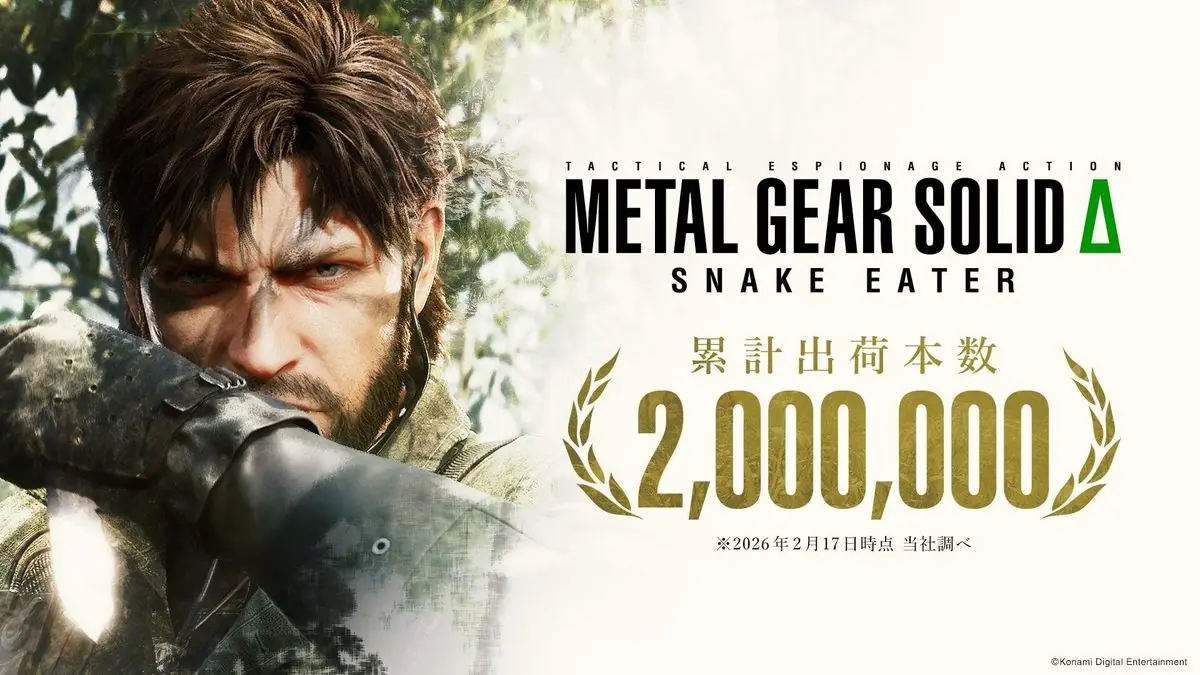
Konami just proved that patience pays off in the remake business. Metal Gear Solid Delta: Snake Eater has hit 2 million combined shipments and digital sales, a milestone that speaks to more than just nostalgic fans throwing money at their childhood memories. This is vindication for a measured approach to franchise revival in an industry that’s gotten uncomfortably good at rushing beloved properties to market.
The gaming community has been tracking these numbers closely, with the milestone making its way across social platforms as fans celebrate what many see as a franchise resurrection done right.
“Metal Gear Solid Delta: Snake Eater shipments and digital sales top two million” — Turbostrider27 on r/PS5
Notably, these aren’t just launch week impulse buys. The game has maintained steady sales momentum since release, suggesting that word-of-mouth recommendations are doing the heavy lifting that marketing budgets used to handle. That’s the kind of organic growth pattern that makes executives take notice.
Meanwhile, the broader context makes these numbers even more impressive. Konami spent years in the gaming wilderness, focusing on pachinko machines while fans wondered if they’d ever see Snake again. The company’s track record with beloved franchises had become, to put it diplomatically, inconsistent. Silent Hill’s various misfires and the messy departure of Hideo Kojima left many questioning whether Konami understood what made their properties special.
But Delta represents something different – a careful reconstruction rather than a hasty cash grab. The development team clearly studied what made Snake Eater work in the first place: the deliberate pacing, the survival mechanics that actually mattered, the boss fights that felt like elaborate puzzles rather than damage sponges. They updated the technical foundation without losing the game’s distinctive personality.
This approach stands in stark contrast to some recent remake efforts across the industry. Where others have prioritized flashy visual overhauls or dramatic gameplay changes, Delta focused on preservation and enhancement. It’s the difference between restoration and renovation – and apparently, players can tell the difference.
The 2 million milestone also arrives at a fascinating moment for the remake market. We’re seeing diminishing returns on some high-profile revivals, with certain projects failing to capture lightning in a bottle twice. Publishers are learning that nostalgia alone isn’t enough – you need to understand why something was beloved in the first place.
Historically, Metal Gear has always been about more than just sneaking around guards. The series built its reputation on innovative mechanics, memorable characters, and Kojima’s particular brand of storytelling that somehow made codec conversations compelling gameplay elements. Delta proves that these elements can survive translation to modern hardware when handled with appropriate care.
The sales performance puts Konami in an interesting position. They’ve demonstrated they can revive dormant franchises successfully, but they’ve also set expectations for any future projects. Fans will expect the same thoughtful approach for potential remakes of other series entries. The pressure is now on to prove this wasn’t a fluke.
Meanwhile, the success creates ripple effects throughout the industry. Other publishers sitting on classic franchises are undoubtedly taking notes. The formula isn’t complicated: respect the source material, understand what made it special, and don’t rush the process. But execution remains everything.
Looking ahead, 2 million sales creates a compelling business case for more Metal Gear remakes. The original trilogy offers plenty of material for similar treatment, each game presenting its own technical and creative challenges. Snake Eater was arguably the most self-contained entry, making it an ideal testing ground for this approach.
The question now isn’t whether Konami will pursue more remakes – it’s whether they’ll maintain the same standards that made Delta work. Success has a way of breeding impatience, and the temptation to accelerate timelines or cut corners grows with each milestone. But if they’ve learned anything from their wilderness years, it should be that some things are worth doing right, even if they take longer.
For now, though, Metal Gear Solid Delta stands as proof that careful craftsmanship still resonates with players. In an industry often obsessed with the next big thing, sometimes the best move is looking backward – but looking carefully.