
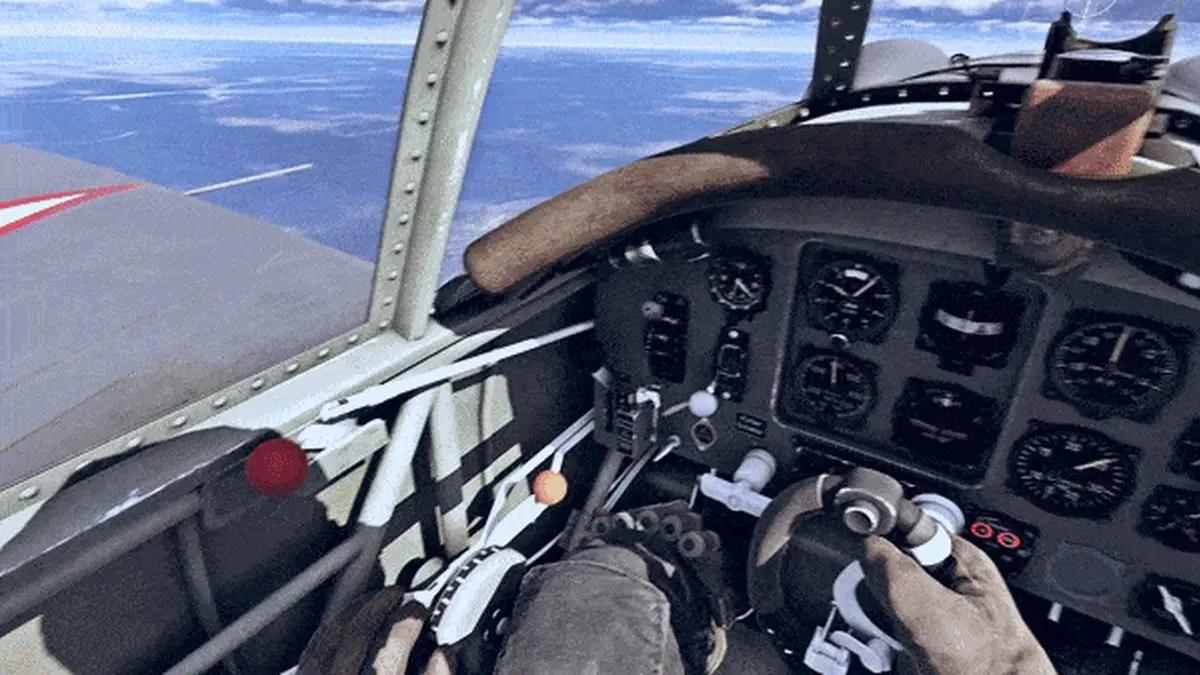
War Thunder players, get ready for some Eastern European flavor. The Ninth Wave major update is bringing two Hungarian aircraft that’ll shake up your Italian tree experience.
We’re talking about the WM-21 Sólyom and WM-23 Ezüst Nyil. These aren’t your typical copy-paste additions either. Both planes pack serious historical weight from WWII.
“Please welcome two more unique Hungarian aircraft! The WM-21 light-reconnaissance bomber and the WM-23 prototype fighter, arriving in War Thunder in the Ninth Wave major update.” — War Thunder on Steam
The WM-21 Sólyom is hitting Rank I as a light-reconnaissance bomber. Don’t let that fool you though – this biplane actually saw real combat. It’s got light machine guns and can carry small bombs, making it perfect for those early-game ground support runs.
What makes this plane special? The Sólyom (which means “Falcon” in Hungarian) wasn’t just some desk warrior’s dream. These things were buzzing around Yugoslavia in April 1941 during the Axis invasion. When Germany kicked off Operation Barbarossa, Hungarian pilots took these biplanes into Ukraine for reconnaissance and close air support.
By 1944, Hungary had built 128 of these aircraft. That’s not a huge production run, but it shows they actually believed in the design. Most ended up as trainers after being pulled from frontline duty, which is pretty standard for older aircraft as the war progressed.
Now here’s where it gets interesting. The WM-23 Ezüst Nyil is basically a Hungarian take on the German Heinkel He 112. Hungary bought the license to build He 112s, then their engineers went “hold up, what if we made this better?”
Spoiler alert: they didn’t.
The WM-23 (“Silver Arrow” for those keeping track) was supposed to be adapted for Hungarian engines and weapons. The prototype first flew on February 23, 1940, and testing went on for about a year. But here’s the thing – it was plagued with problems from day one.
During one test flight, the right aileron just gave up. Complete failure. The plane crashed hard, and that was basically game over for the entire program. They didn’t even bother fixing the prototype. Just straight up abandoned the whole project.
But that’s exactly why this addition is so cool. War Thunder isn’t just adding successful aircraft – they’re bringing in the failures, the what-ifs, the planes that never quite made it. The WM-23 will sit at Rank II in the Italian tree, armed with 12.7mm and 8.56mm machine guns, and it can hit speeds over 500 km/h.
This expansion of the Hungarian branch shows Gaijin is really committing to representing smaller nations’ aviation histories. It’s not just about the big players anymore. Countries like Hungary had their own aircraft industries, their own designs, and their own stories worth telling.
For Italian tree players, this is actually huge. The Hungarian additions give you more variety in the early-to-mid ranks, which has always been a bit thin compared to major nations like Germany or the US. The WM-21 gives you another reconnaissance option, while the WM-23 adds a unique fighter that you literally cannot fly anywhere else.
The historical context matters too. These aren’t just random planes Gaijin picked because they looked cool. Both aircraft represent Hungary’s attempt to build an independent air force during one of the most chaotic periods in European history. The WM-21 proved itself in combat, while the WM-23 shows what happens when ambition meets engineering reality.
Looking ahead, this Hungarian expansion probably isn’t stopping here. If Gaijin is willing to add a prototype that crashed during testing, they’re clearly not limiting themselves to just production aircraft. That opens up possibilities for more experimental Hungarian designs, or maybe even aircraft from other smaller Axis partners.
The Ninth Wave update doesn’t have a firm release date yet, but based on Gaijin’s usual schedule, we’re probably looking at sometime this month. When it drops, both the WM-21 and WM-23 will be waiting in the Italian tech tree, ready to give you a taste of Hungarian aviation history.
Whether you’re a history buff or just want something different to fly, these two aircraft are bringing unique stories to War Thunder. One succeeded despite being outdated, the other failed despite having potential. Both deserve a spot in your hangar.