Sometimes the most random gaming observations hit different. A simple Reddit post about Nintendo’s Game Boy Juke box just unlocked a core memory for thousands of gamers who grew up in the late ’90s.
“I KNEW, I seen the Game Boy Juke box somewhere else before! Hit clips, from 1999” — u/Epsilon123 on r/gaming
That’s it. That’s the tweet that sent the gaming internet down a rabbit hole of nostalgia. One look at Nintendo’s sleek new Game Boy accessory and boom — instant flashback to those tiny plastic music players that defined a generation.
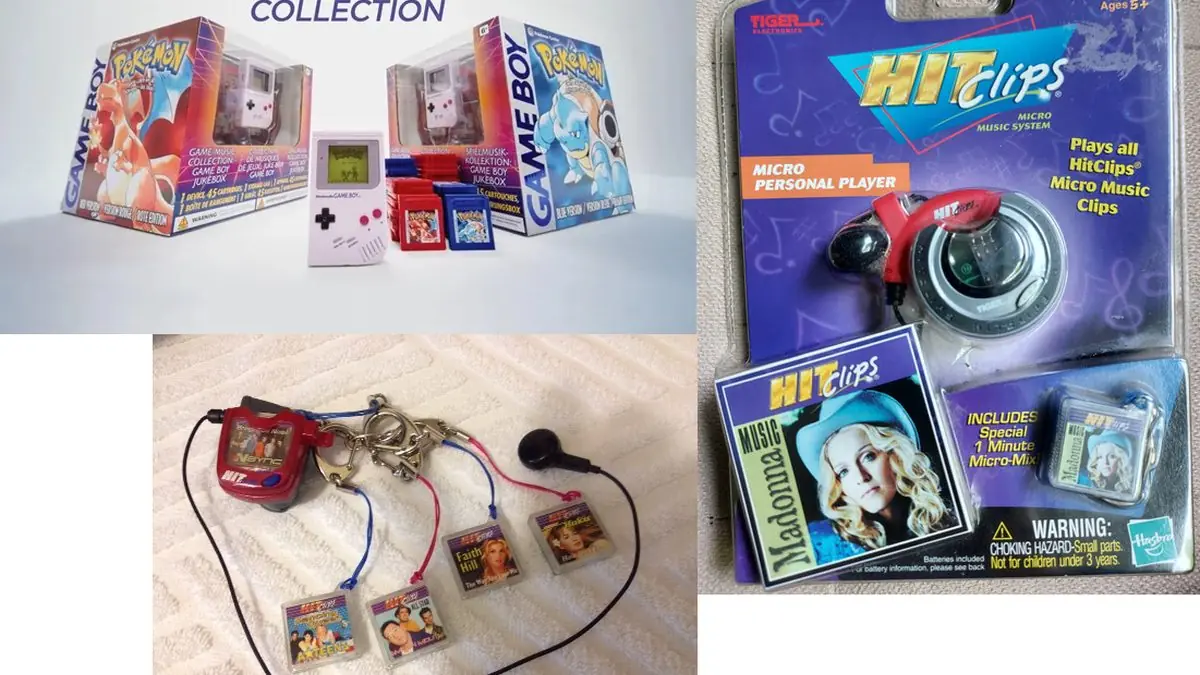
For anyone who missed the Hit Clips era, picture this: it’s 1999, and streaming music doesn’t exist yet. iPods are still two years away. Kids are walking around with these adorable mini boom boxes that played 60-second clips of popular songs. Britney Spears, NSYNC, and Backstreet Boys all got the Hit Clips treatment.
The design similarities are pretty striking when you see them side by side. Both devices have that chunky, portable aesthetic that screams late ’90s tech. The color schemes match up too — that distinctive plastic finish that somehow looked both futuristic and playful at the same time.
What’s wild is how this observation tapped into something deeper than just design nostalgia. Hit Clips represented a specific moment in tech history when companies were figuring out how to make music portable and fun. Sound familiar? That’s exactly what Nintendo’s doing with their Game Boy accessories today.
The timing couldn’t be more perfect either. We’re living through a massive retro gaming revival right now. From the NES Classic to Pokemon cards hitting record prices, anything with that vintage gaming aesthetic is pure gold. Nintendo knows this better than anyone.
Hit Clips might seem silly looking back, but they were actually pretty innovative for their time. They gave kids a way to carry their favorite songs around without needing a full CD player or cassette deck. The 60-second format was limiting, sure, but it was also brilliant marketing — just enough to get the song stuck in your head.
The gaming community’s reaction to this connection says a lot about how we process nostalgia. One person’s random observation becomes everyone’s shared memory. Suddenly, thousands of people are remembering digging through their toy boxes looking for that one Eminem Hit Clip or arguing with siblings over whose turn it was to use the player.
This isn’t just about design either. Both Hit Clips and Game Boy accessories tap into the same emotional territory — the joy of having something that’s yours, something portable, something that makes you feel a little more grown-up. That feeling doesn’t have an expiration date.
Nintendo’s always been smart about leveraging nostalgia without being too obvious about it. They don’t need to slap “RETRO” labels on everything. Instead, they create new products that just happen to trigger those warm fuzzy feelings from childhood. The Game Boy Juke box might be cutting-edge tech, but it looks like something that could have existed alongside Hit Clips.
The broader trend here is fascinating too. Gaming accessories are having a major moment right now. Custom controllers, retro-style headsets, and aesthetic upgrades are huge business. Gamers want their setups to look good, and they’re willing to pay for that nostalgic vibe.
What makes this whole Hit Clips connection even better is how organic it was. This wasn’t some marketing campaign or planned nostalgia bait. Just one gamer’s brain making a connection and sharing it with the world. That’s the kind of authentic community moment that you can’t manufacture.
The fact that a 1999 music device can still influence gaming design conversations in 2026 shows just how powerful good design can be. Those Hit Clips designers probably never imagined their work would resurface in gaming discussions decades later.
Looking ahead, don’t be surprised if we see more accessories that lean into this aesthetic. The gaming industry has learned that nostalgia sells, but it has to feel genuine. Products that capture the essence of what made ’90s tech special without feeling like cheap knockoffs.
The Game Boy Juke box might be a small accessory in Nintendo’s lineup, but this viral moment proves that sometimes the most interesting stories come from the most unexpected places. Who knew that a random design observation could unlock so many memories and start conversations about gaming culture, nostalgia, and the lasting impact of good design?
That’s the beauty of the gaming community — someone always spots the connections the rest of us missed. And sometimes those connections tell us more about ourselves and our shared experiences than any official announcement ever could.