Some gaming posts hit different. When you see a perfectly preserved piece of your childhood still running like it’s 2000, it does something to your soul.
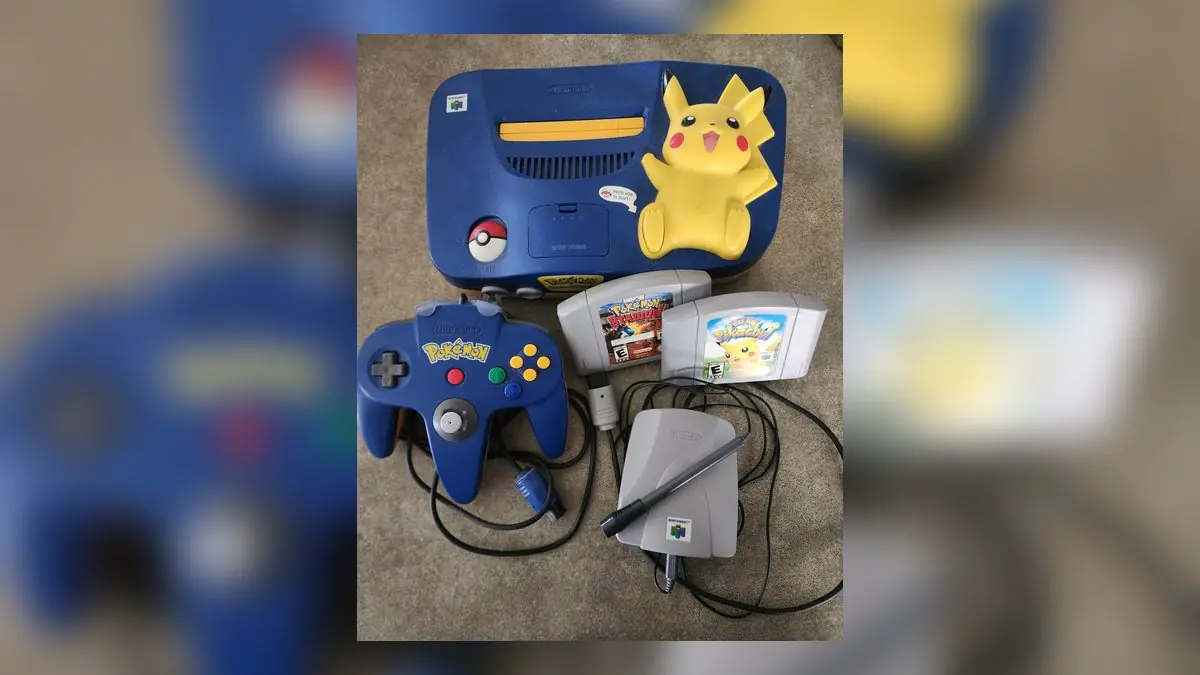
That’s exactly what happened when one Reddit user dropped a photo of their Pikachu Edition Nintendo 64. Not just any N64 — we’re talking about the special yellow console with the light-up cheeks that made every kid lose their mind back in the day.
“My Pikachu Edition Nintendo 64. The first console I ever owned. Games are: Pokémon Stadium and Hey You, Pikachu! My grandparents (they are still alive) got this for me when it came out in 2000. Still works perfectly, even the cheek lights.” — u/No_Dare_1809 on r/gaming
This is what retro gaming dreams are made of. A console that’s older than some college kids, gifted by grandparents who are thankfully still around, and it works like it just rolled off the factory line. Even those iconic cheek lights still glow. That’s build quality that would make modern tech companies weep.
The gaming community is eating this up, and honestly, who can blame them? In an era where consoles brick themselves with firmware updates and controllers drift after six months, seeing a 26-year-old system still kicking is like finding a unicorn.
But let’s be real about the retro gaming scene right now. It’s not all sunshine and working consoles. The market is absolutely brutal. Try finding a decent condition Pikachu N64 today and you’ll be staring down prices that could fund a small vacation. Scalpers have turned childhood memories into investment portfolios.
Then there’s the condition lottery. For every pristine console like this one, there are dozens that look like they survived a nuclear blast. Yellowed plastic, dead controllers, and systems that boot about as reliably as a 1995 Windows PC. Finding one that actually works? That’s the real treasure hunt.
Don’t even get me started on “Hey You, Pikachu!” — the most ambitious and absolutely bonkers game Nintendo ever made. Voice recognition on the N64? In 2000? It was like trying to teach a brick to understand English. But somehow, that made it even more special. It was weird, it was broken, and it was uniquely Nintendo.
The comments section turned into a full-blown nostalgia therapy session. Everyone’s sharing their first console stories, their grandparent gifts, their “I wish I kept mine” regrets. It’s like collective childhood trauma healing in real time.
This hits deeper than just retro gaming collecting. It’s about the emotional weight these machines carry. This isn’t just a console — it’s a time machine. Every boot-up takes you back to Saturday mornings, to being eight years old and thinking Pokémon Stadium was the peak of human achievement.
The retro gaming market keeps exploding because these aren’t just products anymore. They’re archaeology. They’re proof that gaming used to be different. Simpler. More focused. No day-one patches, no microtransactions, no always-online requirements. You bought a game, it worked, end of story.
Nintendo knew what they were doing with special editions like this. The Pikachu N64 wasn’t just hardware — it was a statement. It said “gaming is fun and colorful and doesn’t need to be serious all the time.” Compare that to today’s monolith consoles that look like they belong in a server room.
The preservation angle matters too. Every working retro console is a small victory against planned obsolescence. These machines are proof that hardware can last if it’s built right. They’re the gaming equivalent of a 1970s truck that still runs perfectly — just built different.
Retro gaming isn’t slowing down anytime soon. If anything, it’s accelerating. Nintendo’s been smart about it with their classic mini consoles, but there’s something different about the real hardware. The authentic controllers, the original cartridge slots, the way the power button clicks. You can’t emulate that tactile experience.
We’re probably looking at a future where working original hardware becomes even more precious. The kids who grew up with these consoles are now adults with disposable income and serious nostalgia. That’s a recipe for a market that’s only going up.
Meanwhile, modern gaming keeps getting more complex, more online-dependent, more… corporate. Sometimes you need to boot up a system that just wants to play games. No accounts, no updates, no internet required. Just pure, simple gaming.
This Reddit post is a reminder of what we’re trying to preserve. It’s not just about the money or the collecting. It’s about holding onto pieces of gaming history that made us who we are. And sometimes, if you’re really lucky, those pieces still light up when you power them on.