Nvidia’s RTX 30 series graphics cards are, without a doubt, among the most talked-about products of the moment and the post made by the user NikTek on social media has opened a discussion regarding the legacy of the Nvidia RTX 30 series graphics cards among PC gamers. NikTek’s post argues that the series delivered an immense performance upgrade yet the issue of stocks being sold out before the series could gain the iconic status of its predecessors GTX 10 generators was mainly one of being in the wrong place at the wrong time. This debate takes place in an already tense situation in the gaming community due to the problems of hardware and value.
The post practically does resurrect an old wound. In the process of scrolling through your feed, a post in the form of a nostalgia bomb regarding the RTX 30 series suddenly appears. Nevertheless, they are actually quite right. NikTek’s very first tweet perfectly captured the situation, claiming that if the launch had not been such a disaster – recall when all the bots bought everything, and the actual people were just crying – the 30 series would be right there among the legends with the 1080 Ti. Uh, do you recall those days? Buying a graphics card was as simple as that? What a weird thing!
And the whole issue is getting so much bigger. It doesn’t take much to see it as a real mix of opinions, memories, and a bit of saltiness. There are gamers who still bask in the glory of their 3080s, like the user Zeraki who claimed they haven’t felt the need to upgrade since 2021. That’s a strong assertion, to be honest. Heavy, on the other hand, straight away jumped to call the 30 series “one of the most impressive,” supporting his/her claim through the fact that the latter got far more attention than the 40 and 50- series. Nevertheless, dissenting voices are making themselves heard along with the historical lessons. User rukasumiii reasoned that the 3080 was only about 30% better than a 2080 Ti while the 1080 Ti was almost 2x a 980 Ti. So was the jump really that vast? I guess it all comes down to your perspective.
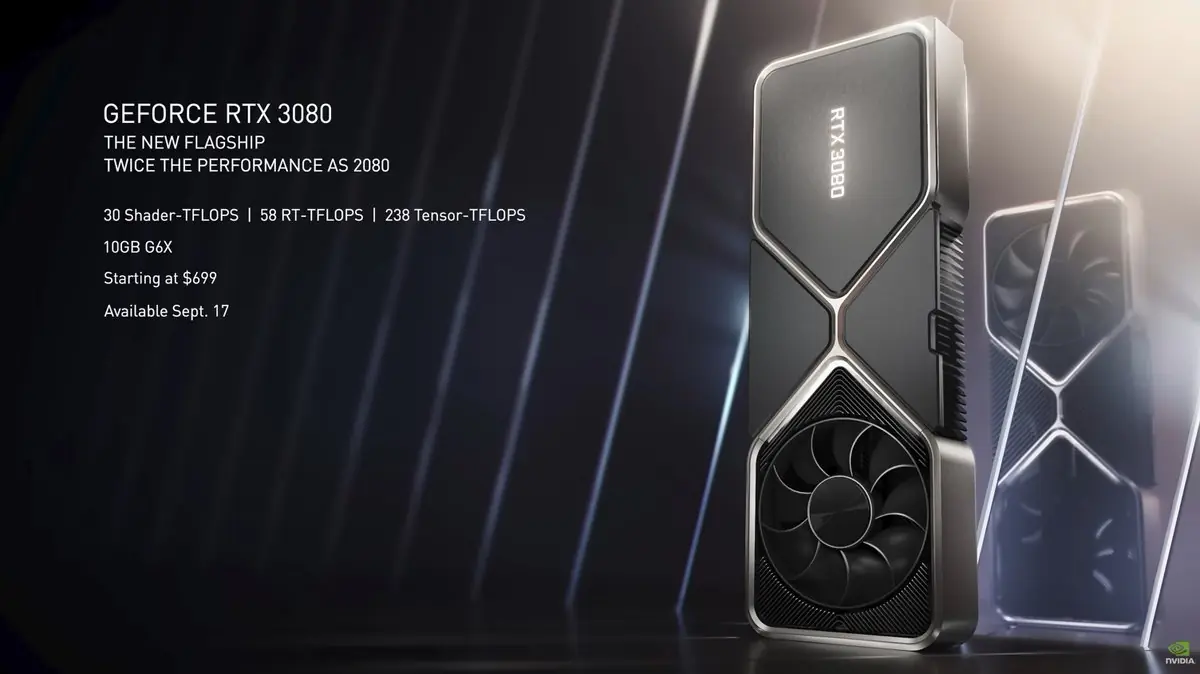
Now the consensus point of the whole debate, everybody agrees here, is the launch disaster. Agenzlabs put it just right: “30 series was a real jump on paper, but if people couldn’t buy it at MSRP, it was never going to get GTX 10 level love.” There you have it. It’s impossible to have a product and not really like it. People are not even remembering their rigs’ fantastic performance, but rather the nightmare of hitting refresh on dozens of websites for months and seeing eBay prices tripled. That bitterness lingers on. User MCH was so adamant that he called the $699 MSRP of the 3080 a “fake” price, claiming that Nvidia simply used it as a marketing tactic before ultimately raising prices anyway. Ouch.
Not to mention, as usual, the topic shifts to the current GPU debates. Is DLSS just a crutch now, as Xavier1415 hinted? Or are the newer cards worth it at all? KlementineHS dismissed the original poster, explaining that the RTX 40 series had an even greater uplift and telling him/her “do your research.” Others like KevSimmer, however, feel comfortable with a 3090 and don’t see any reason for them to upgrade to Nvidia’s new increasingly expensive generations. The message is clear: the value proposition is regarded as broken. When someone like AnnaBelova97 goes from a 1070 to a 4090 and is “never upgrading again,” it is safe to say that prices have become unaffordable for casual players.
It is a bizarre case of a generation that has not been able to escape a time warp. Technically, it was excellent but at the same time literally beaten down by the pandemic, crypto mining, and disruptions in the supply chain. It is the ‘what if’ card. Some people, like GT HWE, are even collecting 3080s now because they are such great cards for the pric… you know, now that you can actually find them. The entire discussion illustrates that for gamers, the legacy of a product is not only calculated by the technical specifications printed on the box but also the buying experience, the price paid, and the satisfaction period. The RTX 30 series was a performance winner but a total failure in terms of accessibility and this is the problem that has turned a major part of the community against it. Eventually, the discussion depicts that for PC gamers, value and accessibility are as important as power, and when a company slips in these areas, that is what it will be remembered for long after the benchmarks have vanished.