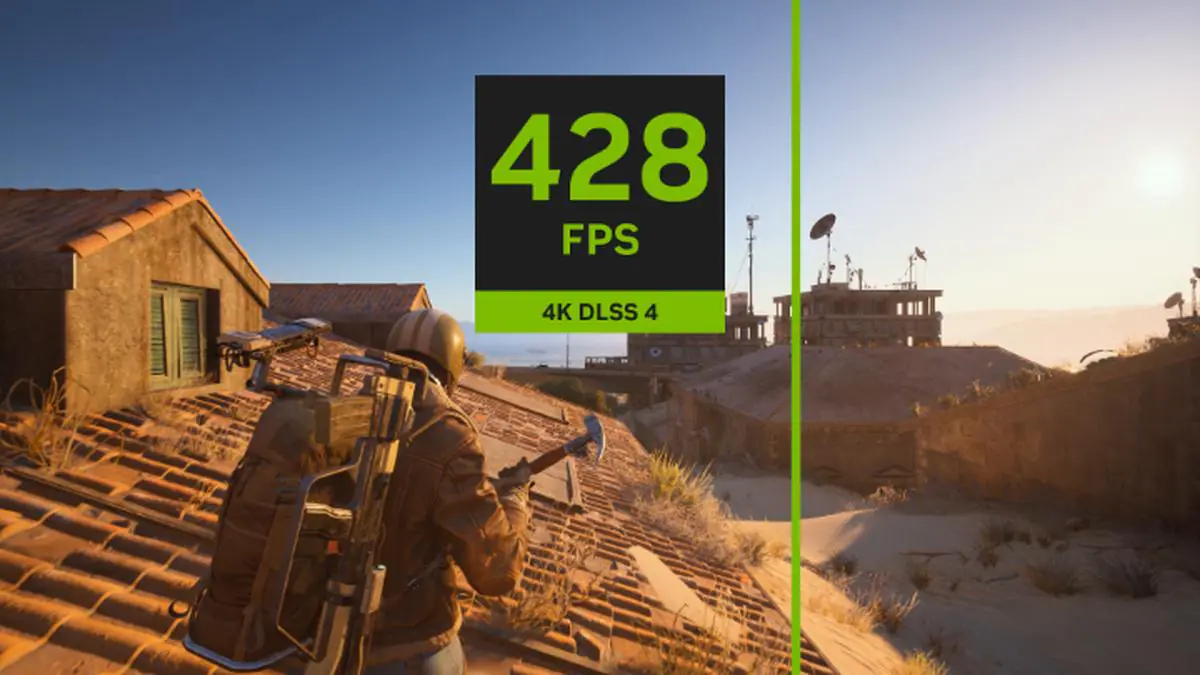
NVIDIA has now started an exciting new offer wherein shoppers who purchase selected GeForce RTX 50 Series graphics cards will receive a copy of the upcoming co-op-shooter ARC Raiders. The bundling and promotion concept tries to capitalize on selling cutting-edge NVIDIA technologies used in the game. Those include DLSS 4 with Multi-Frame Generation, RTX global illumination, and NVIDIA Reflex for reduced latency. For a limited period, the promotion runs to accommodate early adopters jumping into the game with all the graphical goodies enabled from the very outset.
Now, tell me: What does this really translate into? Should one buy a qualifying RTX 50 Series GPU, the buyer will be gifted a free copy of ARC Raiders. Thanks to this being a traditional hardware bundle promotion, emphasis will be placed on the latest features. Foremost among these features is DLSS 4, which claims to offer massive frame rate uplifts with Multi Frame Generation, while RTX global illumination will set the lighting in the game to flow staggeringly. And then, naturally, competition-level players will use NVIDIA Reflex to keep input lag to the barest minimum, a very crucial factor in fast-paced shooters.
NVIDIA has announced the promotion, greatly and as usual. The reactions never were in one direction. The comments under NVIDIA’s tweet-road had me on a roller coaster of excitement, confusion, and pure doubt.
A few were completely excited. User ARCRaidersNews threw in a comment: “RT GI looks so good in ARC Raiders.” Playonshaga wished for ARC’s excellent optimization to continue into full launch. There appears to be legitimate buzz surrounding the game itself, made by Embark Studios, who are also behind The Finals.
Others were bitter about timing. ItzTwonkYT, “actually fuming,” had bought a 5090 three days before the bundle announcement came out. Similar sentiments came from ujwalmishra103, enquiring if his recently purchased RTX 4070 laptop would work with the bundle, and MinaGamer98 questioned whether they would still receive a code for buying a qualified laptop a week ago. It’s the beauty and the curse of tech: buy now, and some sweet deal might come tomorrow.
But the real showpieces and the heated topic areas were the core technologies being advertised. A considerable portion of the comments is understandably skeptical, especially pertaining to Frame Generation. User 1oowiM put it plainly: “I prefer my frames real but thanks.” SonriahWrites followed this up by saying that frame generation was “snake oil” and that contrary to what the ads claim, “false frames don’t improve latency.”
This sparked a fully fledged technical debate in the replies. User fo0gley declared that 4x frame gen causes the latency to feel like “you’re watching a video and you somewhat can control it.” Then user buttons_____ responded, saying that if you’re generating from a high base frame rate like 100fps, input latency increase should be minimal, roughly 10ms. netrogaimenea offered a counter-argument, insisting that it “feels very slow” regardless. There’s clearly a lot of contention about perceived responsiveness of Frame Gen among the more technically inclined gamers.
Other critiques were leveled against the bigger picture of Nvidea’s business praxis. User _lilmashiro accuses the company of “using fake frames and intentionally unoptimizing games for promotion for your new gpus.” Then silbirobi shared the sentiment, saying that “Upscaling and Frame-Gen is no replacement for optimization!” The gist is that some corners of the community are upset that these technologies appear to be more of a crutch rather than an added bonus.
But, naturally, not everyone supports ray tracing anyway. RainVideojuegos argued that “Ray tracing is garbage and unnecessary, classic lightning is more than enough to make games look good.” citing older games that impressed without any “RT BS”. Meanwhile, FoxHoundUnitMGS has poked fun of prioritizing the rate of frames above anything else by sarcastically stating, “oh yeah, that is what we truly want” in reference to high FPS numbers with visual artifacts like ghosting and blur.
Amid all this debate, several relevant questions have been raised. Tuki_Bird asked an important Xbox player’s question: would the PC version through Xbox Play Anywhere support these NVIDIA features, or would they be advocated only in the Steam version?
Where is that going to take us? Well, NVIDIA is pushing hard on its next-gen tech with the RTX 50 series, and using a promising title such as ARC Raiders as its flagship demo is top-notch marketing. This bundle is of high value to every gamer that was already considering upgrading their GPU and is excited about the game. However, it has come across loud and clear from the community that a large chunk of players are deeply suspicious of the AI-generated frames and hypersensitive to anything that might add input latency.
In general, the community wants raw performance and honest optimization now. The success of this promotion and how the community takes to these technologies will, hence, be greatly determined by how well ARC Raiders performs in practice when the players finally get to test it. That would be the ultimate deciding factor of whether or not the technology will live up to the hype.